
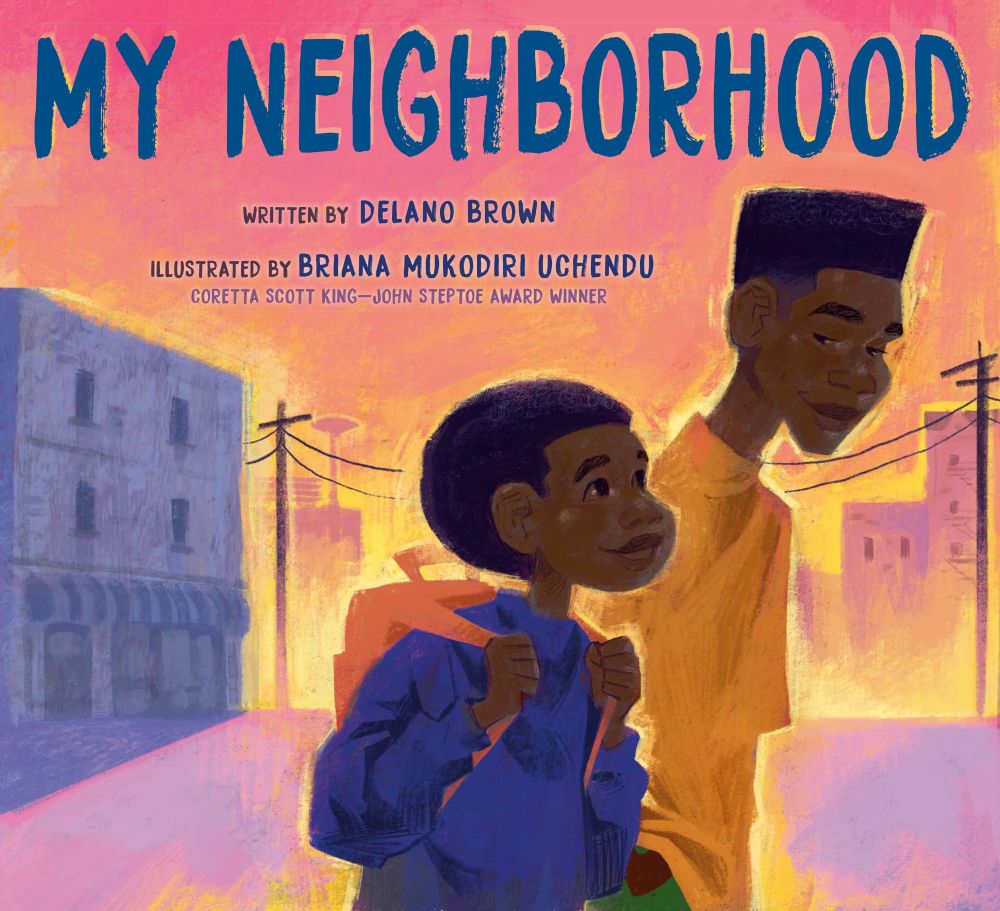
My Neighborhood by Delano Brown, illustrated by Briana Mukodiri Uchendu; Random House Studio, 2026.
Ease through a bustling city neighborhood with the narrator and his older brother in this upbeat, rhythm-rich picture book bursting with good-feels.
“We don’t accomplish anything in this world alone…whatever happens is the result of the whole tapestry of one’s life and all the weavings of individual threads from one to another that creates something.”
~ Sandra Day O’Connor
Why this book? Why will it matter to kids?
Explore an urban neighborhood and discover so much more than the despair often depicted in the media A solid, caring sibling relationship exuding optimism and positive vibes weaves through page after page of energetic happenings in the neighborhood in this joy-filled Junior Library Guild Selection written by debut author Delano Brown and illustrated by Coretta Scott King—John Steptoe Award Winner, Briana Mukodiri Uchendu.
Why read aloud?
We settle into a safe space as we gather to share a book. As we reflect, exchange thoughts, and explore concepts, we are building background knowledge—and community. When read-aloud sessions are routine, children become comfortable voicing their perspectives. They grow in active listening skills and learn to respect the thoughts, feelings, experiences, and beliefs of others. When we (educators, parents, and caregivers) select age-appropriate, length-appropriate stories based on needs and abilities, we offer children the opportunity to see themselves, see others, find validation, and contemplate solutions to conflicts and challenges that they may not have considered.
Read-aloud sessions are inclusive: there are no reading skills or level barriers, and learning obstacles are mitigated by preparation prior to reading the book aloud. In a read-aloud session there is immersion as well as the comfort of distance from the challenges the characters encounter.
Reading aloud engages listeners, offering a positive, secure, stress-free “learning without struggle” experience grounded in a book, the value of which cannot be overestimated.
“You think your pain and your heartbreak are unprecedented in the history of the world, but then you read. It was books that taught me that the things that tormented me most were the very things that connected me with all the people who were alive, or who had ever been alive.” ~ James Baldwin
Levels and Layers of Learning
Grade level: 1-3
Social-Emotional Learning Themes
Acceptance, connection, courage, creativity, curiosity, dedication, diligence, effort, empowerment, encouragement, fortitude, friendship, generosity of spirit, gratitude, hope, inspiration, integrity, kindness, perseverance, persistence, perspective, relationship skills, resilience, resourcefulness, respect, responsibility, self-assurance, self-awareness, self-reliance, social awareness, tenacity, understanding
Content Area Connections:
Social-Emotional Learning, Community, Family
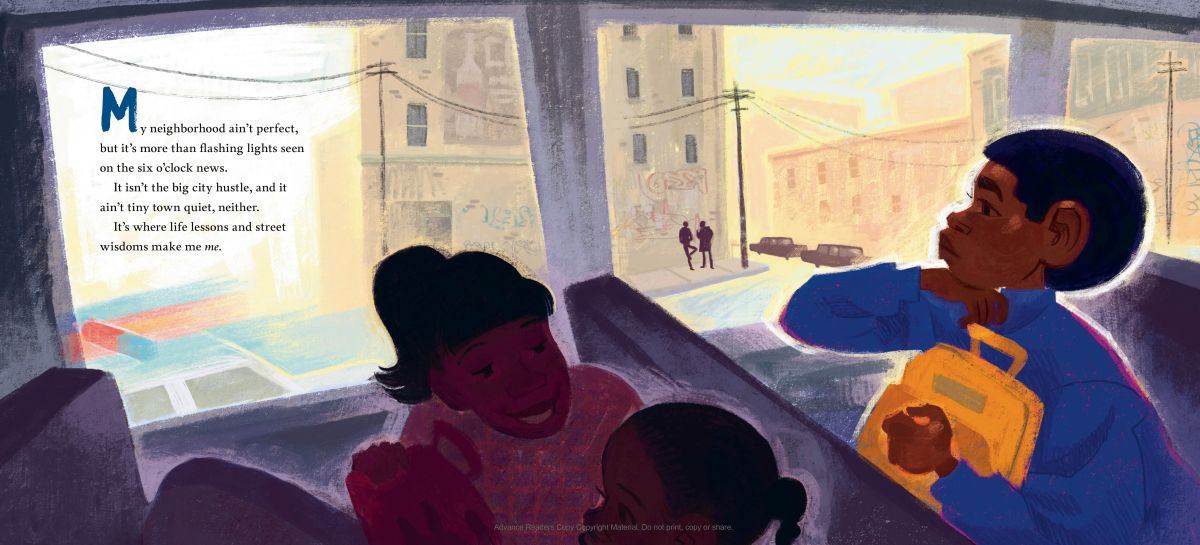
Illustration © 2026 Briana Mukodiri Uchendu
Using This Book in the Classroom
Hit the Ground Running Ready Resources for Educators, Homeschoolers, and Parents
How to pronounce Delano’s first name: DELL-an-OH
Write Away! Ideas to prompt writing
Reading, writing, listening, and speaking form the core of literacy. In robust literacy instruction we aid students in strengthening the connections between these fundamental processes. Shared reading—and dynamic conversations about text—strengthens reading skills and leads to meaningful writing. Multiple strategies are employed in the process of gaining meaning from reading (background knowledge, text structure, sequence, detail, cause and effect, visualization, summarizing, synthesizing, perspective, and more) and we utilize these strategies in the process of writing. Reading skills support writing, and writing skills support reading.
“[There is} a deep connection between how students read, write, and communicate, and how they develop socially and emotionally.” ~ Justina Schlund, Director of Field Learning for CASEL
What is your favorite thing about your neighborhood?
In My Neighborhood we get the sights, sounds, smells, tastes, and good feels of the boy’s neighborhood. Which is your favorite? Describe your neighborhood using all five senses.
In the story, the boy calls his neighborhood “another classroom.” What does he learn as he travels the neighborhood with his big brother?
The boy enjoys being with his big brother after school. Is Trevor a good big brother? How do you know? Explain, with details from the story.
Who is your favorite family member? Why? Describe special things you do together. Draw a picture.
Tony the barber says, “Look good, feel good, do good.” What could you do to follow Tony’s advice?
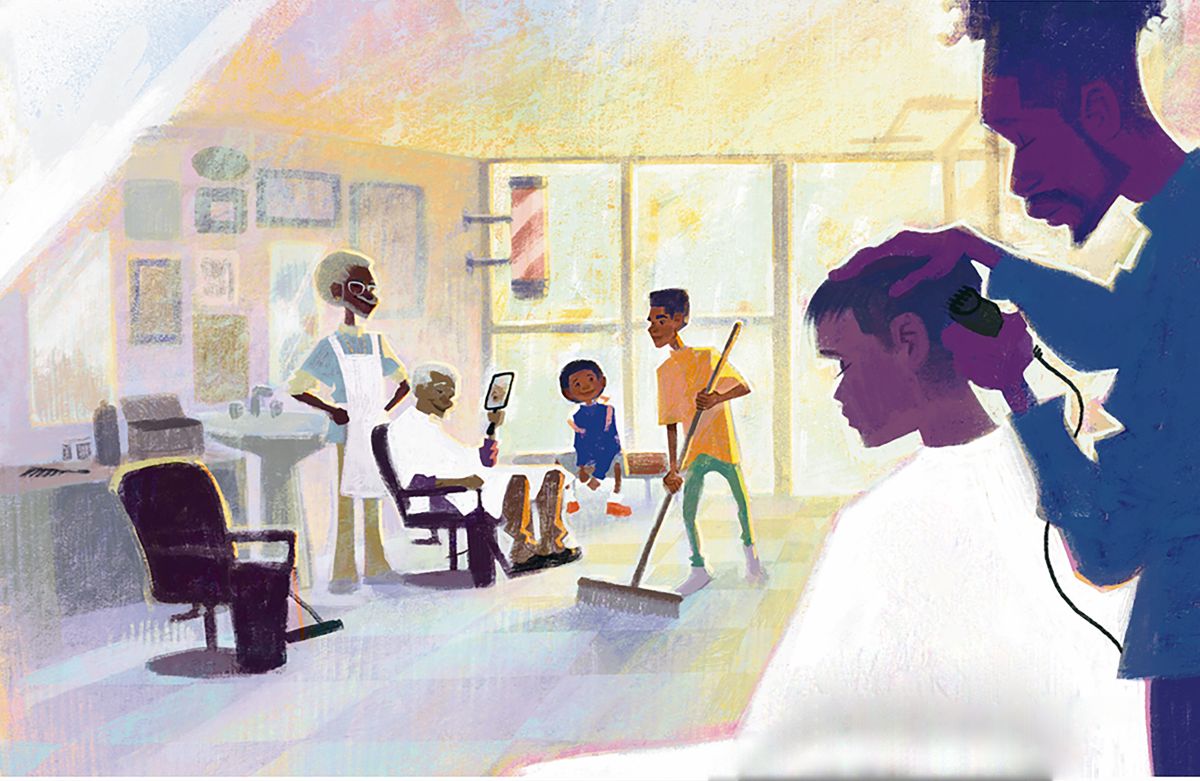
Illustration © 2026 Briana Mukodiri Uchendu
At the chess games in the park, the boy confesses that it’s hard to wait his turn. Describe a time when you felt this way.
The boy says, “Morning inhales and exhales are free. You gotta be grateful you opened your eyes.” What does this mean?
List the “life lessons and street wisdoms” the boy’s neighborhood offers.
What is your favorite page in the book? Why?
Poetry Break Related poetry to recite before or following the reading of this book
Poetry breaks fit perfectly into the framework of the school day. These brief moments can signal change, smooth or frame transitions—from beginning or ending the day to lining up for lunch; from zipping up backpacks and jackets to shifting from one subject to the next. Poetry breaks can reset mood or tone, providing a moment to pause, reflect, and breathe. Reading a poem aloud typically takes less than a minute, yet it can introduce or reinforce a concept, provide clarity, celebrate language, exemplify rhythm, enhance vocabulary, expand understanding, increase attention span, initiate reflection, spark imagination, or simply summon a giggle. And, poetry soothes and strengthens the spirit.
“Poetry builds resilience in kids and adults; it fosters Social and Emotional Learning. A well-crafted phrase or two in a poem can help us see an experience in an entirely new way.” ~ Elena Aguilar
Poetry Collections to Pair with My Neighborhood
- Dictionary for a Better World: Poems, Quotes, and Anecdotes from A to Z by Irene Latham and Charles Waters, illustrated by Mehrdokht Amini
- The Dream Keeper and Other Poems by Langston Hughes, illustrated by Brian Pinkney; suggested selections: “My People,” “Joy,” and “Dream Variation”
- The Negro Speaks of Rivers by Langston Hughes, illustrated by E. B. Lewis
- Poetry for Young People: Langston Hughes edited by David Roessel and Arnold Rampersad, illustrated by Benny Andrews; suggested selections: “Youth,” “My People,” “Walkers With the Dawn,” “Hey! Hey!,” and “Final Curve”
- Where I Live: Poems About My Home, My Street, and My Town by Paul B. Janeczko, illustrated by Hyewon Yum
- Woke: A Young People’s Call to Justice by Mahogany L. Browne with Elizabeth Acevedo and Olivia Gatwood, illustrated by Theodore Taylor III; suggested selections: “Instructions on Listening to the Trees,” “What Is an Intersection?,” and “A Me-Shaped Box”
Poetry Collections for the Fall Season
- Autumnblings by Douglas Florian
- A Child’s Calendar poems by John Updike, illustrated by Trina Schart Hyman; see “November”
- Holiday Stew: A Kid’s Portion of Holiday and Seasonal Poems by Jenny Whitehead; see Fall chapter
- Thanku: Poems of Gratitude edited by Miranda Paul, illustrated by Marlena Myles
- We Are Grateful by Traci Sorell, illustrated by Frané Lessac
And Then There’s This…
Enrichment activities, related books, online resources, craft projects, and ideas for further study
A teacher resource for My Neighborhood includes a poster and various activities.
See also additonal specific grade level suggestions offered by Delano in our interview below.
Book Collection Suggestions
Reading multiple books on a topic allows for deeper understanding and connection. Students’ knowledge base expands, comprehension increases, critical thinking sharpens, conversations deepen, and writing becomes more meaningful.
Recently Released Books That Pair Well with My Neighborhood
- Black Boys, I See You by Wade Hudson, illustrated by Keith Mallett; affirming text and dreamlike art celebrate Black boys and the range of who they are and what they aspire to and can achieve; Grades 2-4.
- Night Ride by Christopher Myers; stunning wordless picture book illustrated in stained glass follows a group of friends enjoying a nightime bike ride; Grades 4-up.
- Sam’s Neighborhood: How One Deaf Neighbor Transformed a Community by Patricia McCormick, illustrated by Ziyue Chen; Grades 1-3; based on a true story; introduces more than 20 ASL signs throughout the story.
- That You Are Here Is No Small Thing by Traci N. Todd, illustrated by Vashti Harrison; history and culture of the Black experience accessibly told; uplifting text and illustrations; Grades 1-2.
Recent Releases for Your Seasonal Shelf
- Be the Acorn by Jason Douglas Griffin; Grades K-2
- Fall Day, All Day by Kari Percival; Pre-K—Grade 2
- Goodbye Autumn, Hello, Winter by Kenard Pak (latest addition to Pak’s Changing Seasons series)
- The Last Leaf by Ali Pye; Pre-K—Grade 2
- Mary E. and the Apple Tree by Cynthia Cliff; Grades K-2
Have a title to suggest? Scroll down to add it in the Comments section at the end of this post.
Feel free to share this post with anyone you think might be interested: teachers, librarians, counselors, homeschoolers, parents, or authors. Want to receive the latest post each month? It’s free! Just sign up here. We never sell or share subscriber information.
Meet the Author

Jamaican-born Canadian author Delano Brown is a Registered Early Childhood Educator. A fresh voice on the Canadian literary scene, Delano brings a lyrically poetic style to his debut picture book, My Neighborhood. He is passionate about being an understanding and authentic voice for children who want to see themselves and their experiences reflected in the pages of a book.
Drawing from his work in education, Delano continues to create relatable stories that explore community, student life, and the joys, mistakes, and often-misunderstood moments of childhood. His current undertaking, School Up North, uses the power of words to bring to life a voice filled with wit, zeal, and honesty.
When time permits, Delano can be found behind the lens of his camera or immersed in his comic book collection. Learn more on Delano’s website.
Backstory: Q & A with Delano Brown
I’ve enjoyed getting to know Delano! After reading a review copy of his debut picture book, I invited him to be my featured guest this month. Delano is upbeat, sincere, dedicated, and refreshingly honest in discussing his journey to a dream-come-true children’s book publication. Sit back, relax, and get ready for some warmth and laughter. Delano is in the house!
Judy Bradbury: My Neighborhood is your debut picture book, and it has been named a Junior Library Guild Selection. Congratulations! Tell us about this project: What seeded its creation? How did it develop from idea to published book?
Delano Brown: First, thank you for having me, Judy. Children’s Book Corner is a welcoming spot to talk about my debut picture book My Neighborhood. It is a humbling honor for My Neighborhood to be named a Junior Library Guild Selection, and here in Canada, it’s nominated for a Blue Spruce Award, through the Forest Of Reading program. Thank you, I appreciate the love.
How everything unfolded for My Neighborhood could take some time, but I’ll give you the Coles Notes version. I like writing and I was deep into writing a middle grade story that came to me while I was quite busy watching the evening news. I wrote over 40,000 words and was satisfied with where it was and took it to my critique group (named the Lunch Table). While the story was being critiqued, one of the members said, “Hey Delano, you should make this into a picture book, it feels like one.” Excited, I jumped right to it. Sorry, no that’s not really what happened. I thought you gotta be kidding me. I just poured my heart into this and now you want me to pare it down to less than a thousand words. You’re joking, right!
It wasn’t as daunting as I thought because I knew the story. So, I picked out what I needed, wrote what I wanted to say and came up with a manuscript that won me a mentorship. I was blessed to be mentored by the wonderfully talented Maisha Oso, through the Picture Book Raising Stars (PBRS) mentorship program.
After polishing the manuscript, I was ready to query and prepared for rejection (not at all), and more rejection and after that rejection, more rejection, until I got my YES. That yes came from Ariana Philips of the Jean V. Naggar Literacy Agency. It was and is the second best yes, I’ve received. On February 19, 2024, Ariana sent My Neighborhood out on submission, the next day it was in an auction. I settled with the brilliant and inspiring editor Annie Kelley of Random House Studio, who introduced me to my illustrator, the award-winning, super talented, Briana Mukodiri Uchendu. Annie and I went over the manuscript, tweaking it a tiny bit, before handing it over for Briana to do her thing. Becoming traditionally published is a test of an author’s patience. As the main character expressed, “Confession. It’s hard to wait my turn.” Finally, September 15, 2026, came around, the publication date otherwise known as My Neighborhood’s Book Birthday. It’s going to be a yearlong celebration, this being my debut book.
JB: You dedicate this book to your parents, and it is so heartfelt. In part you write, “ Each neighborhood move made Ann, Chris, and me stronger, wiser, and closer.” How did your childhood inform this book?
DB: Growing up, my parents moved us to areas they believed were the best fit for our family. Close to schools, parks, and communities where neighbors were willing to help their fellow neighbor. My father worked days and my mother worked evenings. There was a window in between where my mother headed to work and my dad was on his way home and the school bell rang to end our day. In that space of time, innocent mischief could happen and my sister would try and make sure my brother and I didn’t get into any or too much trouble.
Older siblings are an extension of a parent’s love and care. Ann kept us on the task at hand, but gave us time to play or explore our surrounding. Sometimes my sister would be given instructions from our parents to do chores before or when we got home. My sister kept us safe and allowed a little fun in the process. She saw our various neighbourhoods for what they were in the GTA and translated that knowledge to myself and my brother Chris. So, when it was time to write my manuscript it was easy to pull from my core memories and adapt them to this fictional truth of My Neighborhood.
JB: Tell us about a challenge you faced in the creation of My Neighborhood, or provide a memorable (or humorous!) anecdote related to the writing of the book.
DB: As some of your audience may know, writing is a lonely and humbling experience. You can have the highest of high and yet feel isolated, and sometimes be just humbled. When my agent told me that my manuscript was sold, I was teaching and I was so excited, I told my teaching partner that I had to interrupt our lesson for this special moment. In her excitement she agreed and asked our kindergarten class to listen to a story I (Mr. Brown) wrote. The children sat attentively awed by my childlike giddiness. I held the paper in front of them and read My Neighborhood out loud for a captivated audience for the first time. When I was finished, I asked the class to give me a thumbs up if they like the story. It was unanimous, I had thumbs up, even double thumbs up. Months later, I received the rough draft of Briana’s black-and-white depiction of how my story unfolds, with art notes here and there. For me it was stunning to look at those roughs. Once again, I’m excited to read this in front of my class. I project onto the whiteboard. Now they can see how each paragraph and sentence has a rough black-and-white drawing connecting to the words. After I finished reading, the room was silent. Again, I asked for thumbs up if they liked it. I watched slow moving arms and witnessed a group of thumbs down, some undecideds and a lot of “Where’s the colour?” and “This isn’t a very good book.”
I was shocked, surprised, strangely sad, but not sad enough to be really sad. Just stumped. Finally, the time came when I got my advanced copy. Excited energy coursed up and down my body. It was a busy day, and we had our Reading Buddies with us. (Reading Buddies are Junior to Intermediate [Grades 6-8] classes that help encourage reading for Kindergarten) This time I let them finish their activity and had them all sit as I read my now book for the third time to my class and the first time to this Grade 6 class. After reading I didn’t have to ask for thumbs up. The class was already showing their thumbs up, some giving me double thumbs up. Older students were trying to mimic the handshake done in the book and asking where they can get the book. Then one of my kindie [kindergarten] students raised their hand and asked, “Mr. Brown, I really like the book. Who wrote it?”
JB: What is one unexpected joy that came from the creation of My Neighborhood?
DB: There are many joys that have come from writing My Neighborhood. The all-encompassing joy of being a part of Picture Book Raising Stars, meeting author and friend Maisha Oso, getting my agent Ariana Philips, connecting with my editor Annie Kelley and so much more. But the most unexpected joy has been connecting with my brilliantly talented, caring, thoughtful illustrator Briana Mukodiri Uchendu and letting her do her thing. Our initial meeting at a Starbucks (not promoting, no royalty cheques here) at ALA in San Deigo was joyous and had all the makings of a purposeful connection.
JB: What is your favorite illustration in the book? Why?
DB: This is a great question. Briana, when you get to see this, just know I like everything you did in this book. But Judy asked me a specific question, and I have to give an honest answer. My favourite illustration goes with this text: Understanding. Morning inhales and exhales are free. You gotta be grateful you open your eyes.
When you look at my main character in that setting you can feel the warm breeze hitting your face as it does his. You feel the brilliance of the sun and pleasant aroma of Spring, morphing into summer. The pastel colours are like soft-serve ice cream that make you want to stay in the moment.
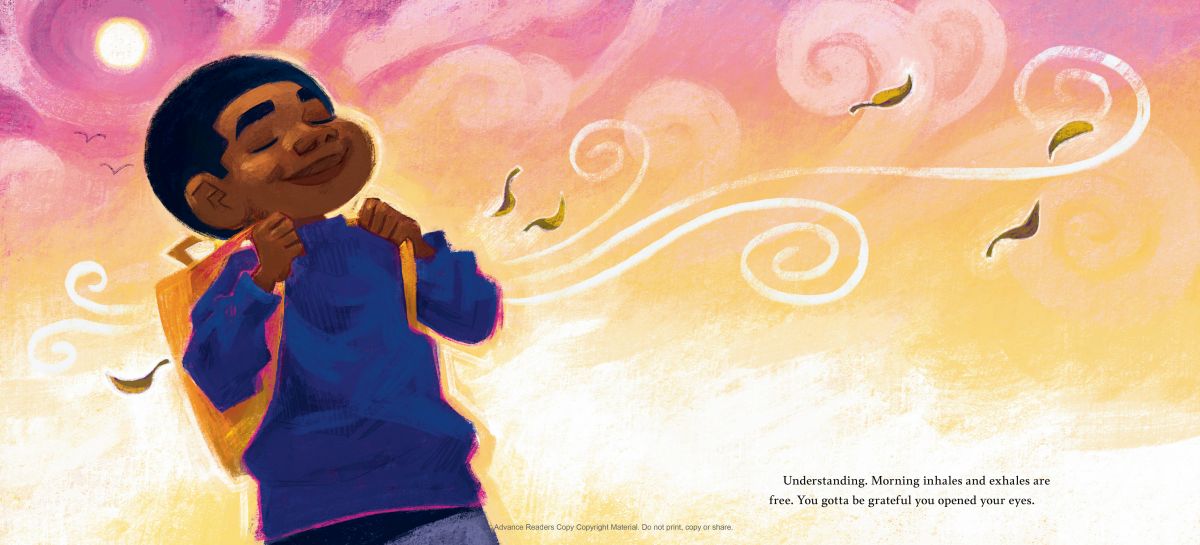
Illustration © 2026 Briana Mukodiri Uchendu
JB: Who do you consider your target audience to be and why?
DB: I would love to have a large eclectic audience because within a group of that many readers My Neighborhood would connect with the adult reader that enjoys reminiscing, the teacher that wants to bring a sense of community and equity into the classroom, the child that sees themselves represented on the page, the student that knows he or she can make a difference with one small act of kindness and for the person that enjoys reading a good book on any given day. These are the people I believe My Neighborhood is targeting.
JB: What do you hope young listeners / readers will take away from My Neighborhood / What need(s) does this picture book satisfy?
DB: As I mentioned earlier, when readers and young listeners turn the pages and hear the words, I want them to see themselves reflected on each page. Sure, the characters are brown skin boys, but they are doing and seeing things that a reader or listener could be doing. Creating a handshake, between father and son or friend to friend. The need for comradery is satisfying and inspiring. The need to remember that playfulness can happen at any time and embrace it, no matter how old you are. Cause freefalling can be fun. The need to be reminded that kindness goes a long way and not everyone is promised tomorrow. Understanding that inhales and exhales are free. I hope readers and young listeners come away with an understanding that they are in every way a part of their neighbourhood and their neighbourhoods exist because they participate in being the best human they can be.
JB: How do you see My Neighborhood connecting to curriculum or being used in learning settings?
DB: Another great question! Being Canadian, our curriculums may differ a bit. So, I’ll answer using the learning setting and how My Neighborhood connects within that framework.
Kindergarten:
After reading the book you can take your class on a neighborhood walk. Write down what they saw, heard, smelled, and felt; or create a neighborhood mural or maybe ask what would be the perfect neighborhood to live in, then list those suggestions and build that neighborhood.
Primary:
You can do something similar to the Kindergarten suggestions and add your own little twist. Students could be encouraged to write what they think the book is about before reading and then write what they now know about the book after reading it. Have the class choose a page that can become an extension of the neighborhood, a spinoff to the story of My Neighborhood. Students can compare urban neighborhoods versus rural neighborhoods.
Junior:
Building off what is happening in Kindergarten and Primary, you could suggest to the student to interview someone from the neighborhood. Find out why Tony opened up a barbershop, who is the best chess player in the park, and get to know a little bit more about George. Maybe suggest the students write about the similarities and differences that My Neighborhood has with their neighborhood. Use different mediums (water colour, collage, charcoal, etc.) to create an illustrated version of their neighborhood.
Intermediate:
Use the many suggestions that have been made earlier and then add your own flair to them. With older students you can really stretch their thinking. Ask them to rewrite the story using their neighborhood. Because the words on the pages are lyrical, you could introduce poetry to the students and ask them to write a poem about their neighborhood.
High School:
The canvas is blank at this stage. You can take My Neighborhood into any subject except for the sciences and math (okay, maybe there, too; why not!). Discuss the importance of small businesses to a neighborhood in business class; create a play or short skit in drama; geography of a neighborhood in geography; short stories, essays, poetry in English, and use in subject areas that help promote community.
My Neighborhood is a versatile story that can be used in elementary schools, high schools, and even in post-secondary. It can be added to your curriculum in a variety of ways.
JB: Excellent suggestions, Delano!
What would surprise readers to learn about you or about the writing of My Neighborhood?
DB: The same thing that surprises me every time I look at My Neighborhood. That this beautifully illustrated book started out as a 40,000 word (and growing) middle grade manuscript. During that time I was going back and forth with an editor before the suggestion was made and I started pulling out the right number of words to tell a picture book story.
JB: If you could ask your young audience one question, what would it be?
DB: Sure, but it’s a two-for-one deal.
Do I spell neighbourhood with a ‘u’ and can you spell supercalifragilisticexpialidocious?
JB: Well, I will admit my spell check was having trouble with all those “u’s” you were throwing my way!
What project(s) do you currently have on your desk?
DB: I’m currently working on several projects: a middle grade novel about a well-liked academically strong, two-sport athlete that is being cyber-bullied. It’s cross between Black Brother, Black Brother and In The Key of Nira Ghani; and a few fun picture books, because everyone needs a laugh these days. Coming in 2029, I have another picture book titled, School Up North, illustrated by the man himself Frank Morrison.
JB: What is one question you wish I had asked, and what is your answer?
DB: Hmmm, a question I wished you asked…Okay, here it is.
The San Fransico forty-niners have been to the Super Bowl eight times and have won five times. Will they when a sixth Super Bowl?
As a fan they should be the only team to win eight Super Bowls with no losses, but the reality is they have three Ls and I would like them to win a sixth Lombardi trophy and be the first to seven. But in today’s NFL, that’s tough to do. So, my answer is YES, I’d love to see the NINERS win a sixth Super Bowl! LET’S GO FAITHFUL!!
JB: Over here, we’re rooting for the BUFFALO BILLS to finally get their turn for a Super Bowl win this season! LET’S GO, BUFFALO! (Where a favorite motto, compliments of QB Josh Allen, is BE GOOD, DO GOOD, GOD BLESS & GO BILLS not unlike the barber Tony’s advice in your story!) 😊
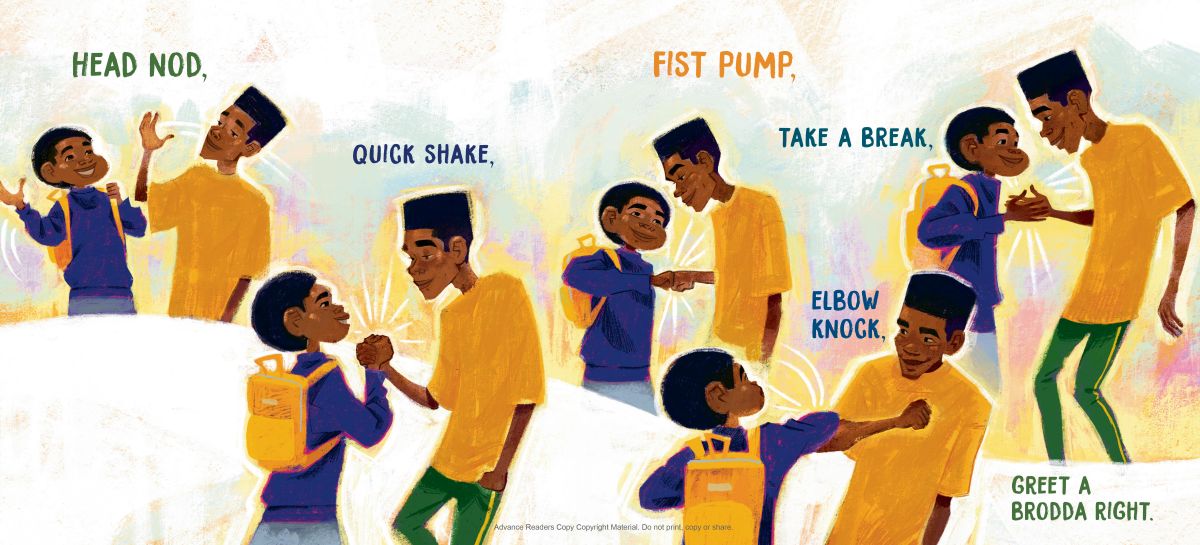
Illustration © 2026 Briana Mukodiri Uchendu
About the Illustrator
Learn more about Coretta Scott King—John Steptoe Award Winner, Briana Mukodiri Uchendu and find her on Instagram.
Sidebar Spotlight New releases of note
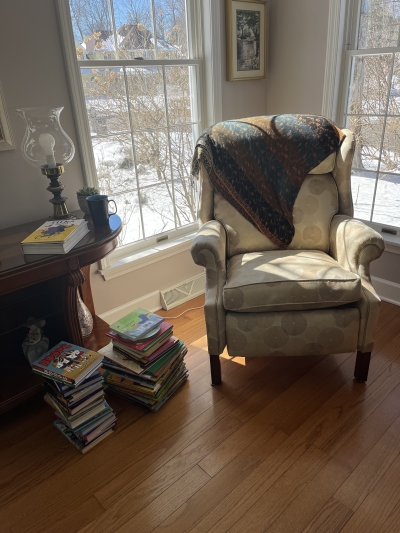
Each month I receive several boxes of books for review from various publishers. As I read and peruse the books, I place them in two piles: those that I will consider featuring on the blog, and those that don’t fit the theme of Children’s Book Corner blog for whatever reason. Ultimately, I choose the one new release I will feature on my monthly blog post. Yet there are many terrific books I wish I could give a shout-out to, even if I can’t write an entire post about each one. So I highlight those books on most Mondays on Instagram and Bluesky.
Sidebar Spotlight is a means of giving a nod to new releases that, in my opinion, are noteworthy. I’ve linked each title to Bookshop so you can learn more. Happy reading, friends! And feel free to comment on these or other new books in the Comments section at the end of this post.
- Gathering the Light by U. S. Poet Laureate Joy Harjo (a member of the Mvskoke Nation) illustrated by Anishinaabe artist Mangeshig Pawis-Steckley is a luminous picture book highly recommended for read- aloud in the primary grades to celebrate Native American Heritage Month (November) and beyond. This picture book celebrates thoughtfulness, kindness, and connection with accessible text accompanied by stunning art.
- How a Bear Became a Book by Annette Bay Pimentel, illustrated by Faith Pray is a playfully informative picture book that not only will interest young readers in how a beloved character came to be, but also how a beloved classic was imagined into reality. So much here for the curious, offered in a creative, engaging format. In-depth back matter. Highly recommended for Grades 2-4.
- Many Ways of Being Native by Ginger Reno, illustrated by Johnson Yazzie is a recommended read-aloud for Grades K-2 to celebrate Native American Heritage Month and beyond. Find more resources on Children’s Book Corner blog post featuring Gabriel’s Winter Count.
- Snow Geese Season by Angela Burke Kunkel and illustrated by E. B. Goodale is a stunningly illustrated, deeply comforting story about how one caring person in our lives can make all the difference as we navigate tough times. Highly recommended read-aloud for Grades K-2.
Thanks for reading Children’s Book Corner! If you would like monthly posts delivered free to your inbox, sign up here. We never sell or share subscriber information.
News, Updates, & Items of Interest
Throughout Nonfiction November, Lerner Books is offering free access to video read-alouds featuring simple, engaging nonfiction titles selected specifically for classroom discussions and library programs. Register once to stay connected throughout November. You’ll receive weekly emails on Sundays with read-aloud links and access to the content landing page that hosts a variety of resources and activities.
November is also Native American Heritage Month. Find a variety of resources on this Children’s Book Corner blog post.
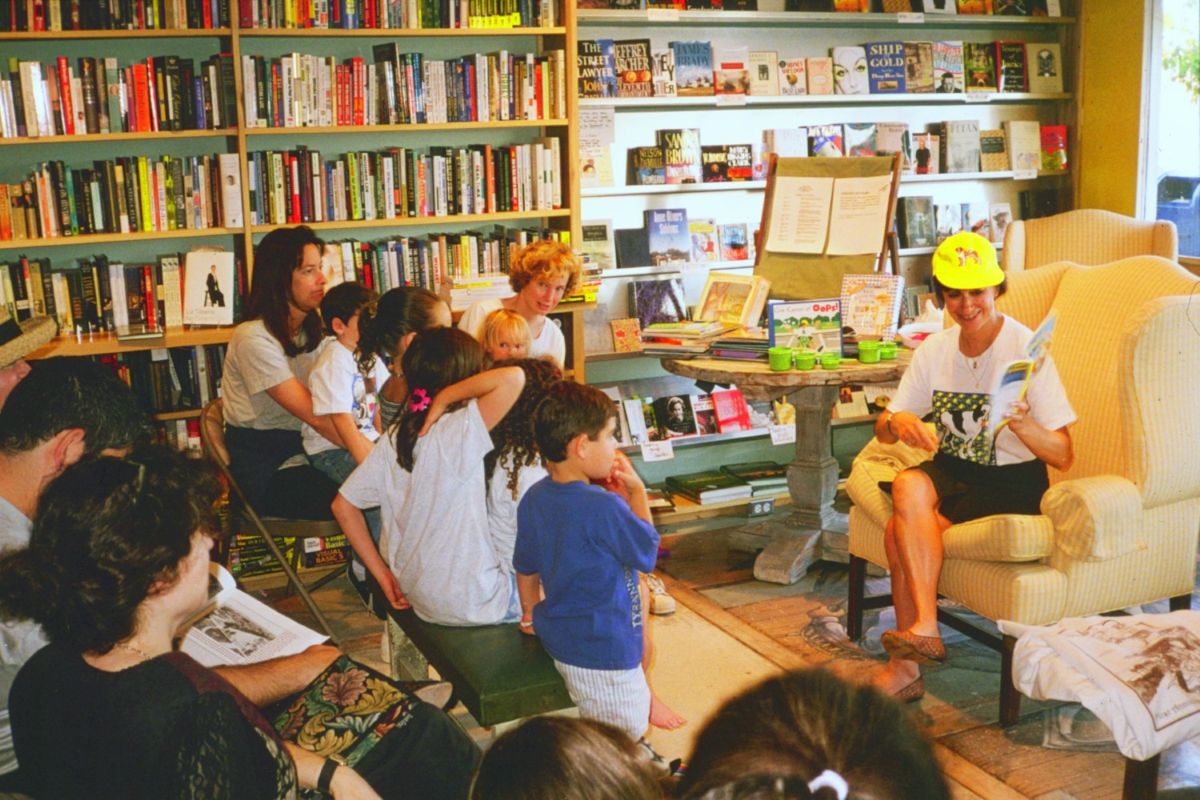
This Fall season finds me out and about enjoying school visits, participating in book festivals and panel discussions, and just having a bunch of bookish fun! Find information about where my books and I will be on my Events page.
Find me online at Instagram, Bluesky, and LinkedIn where I post about books, book-related items of interest, Little Free Libraries, and occasionally travel (on IG). Connect with me there!
I am currently booking school visits and professional development sessions for the 2026-27 school year. Find information and contact me to discuss a visit tailored to meet your school’s needs.
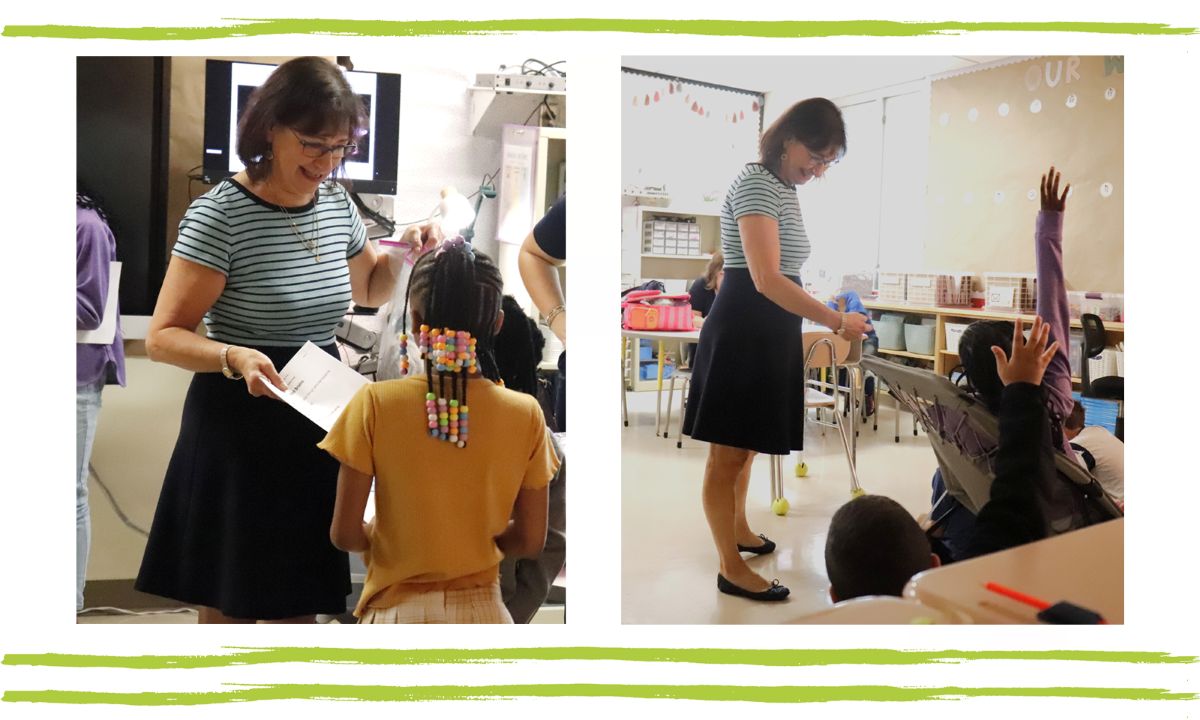
Photo credit: Jody LaRose
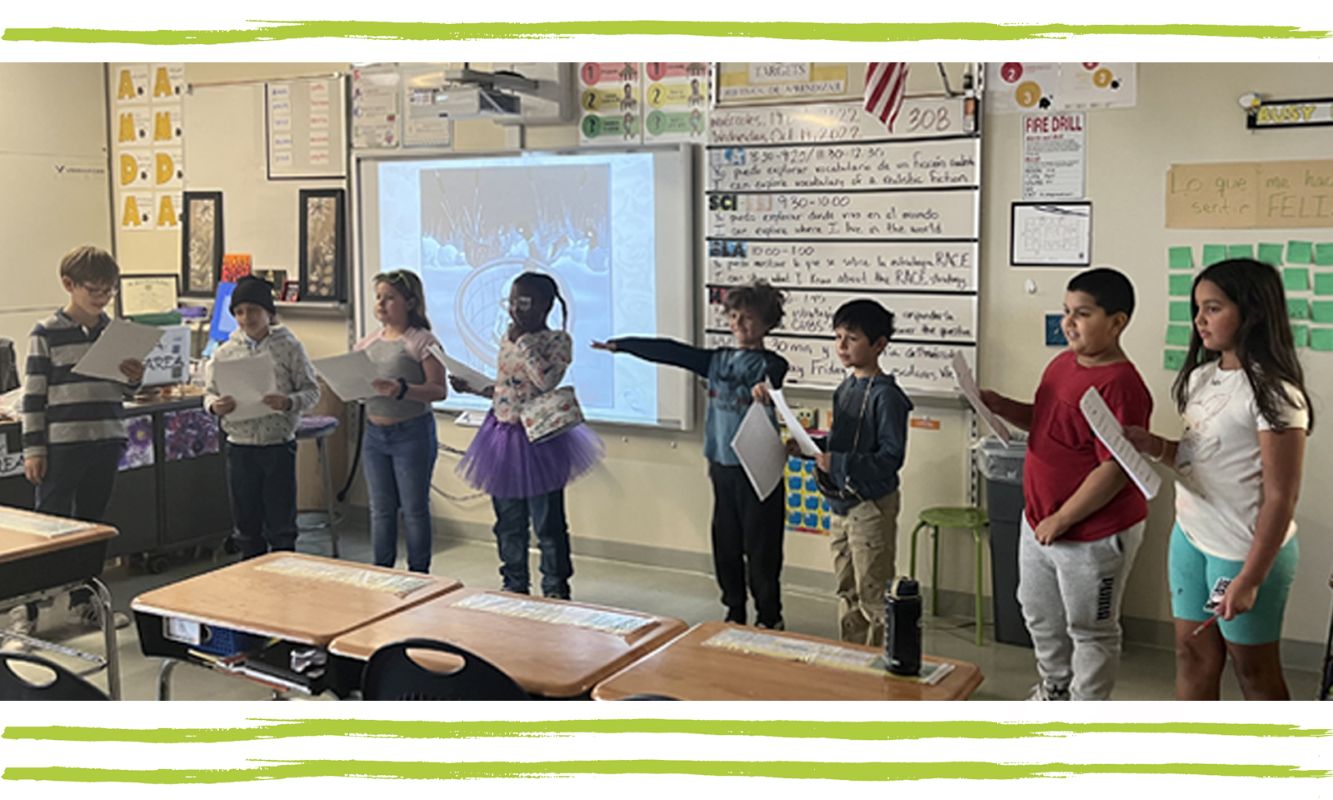
Readers Theater with props! Cayuga Island Kids, The Adventure of the Big Fish by the Small Creek
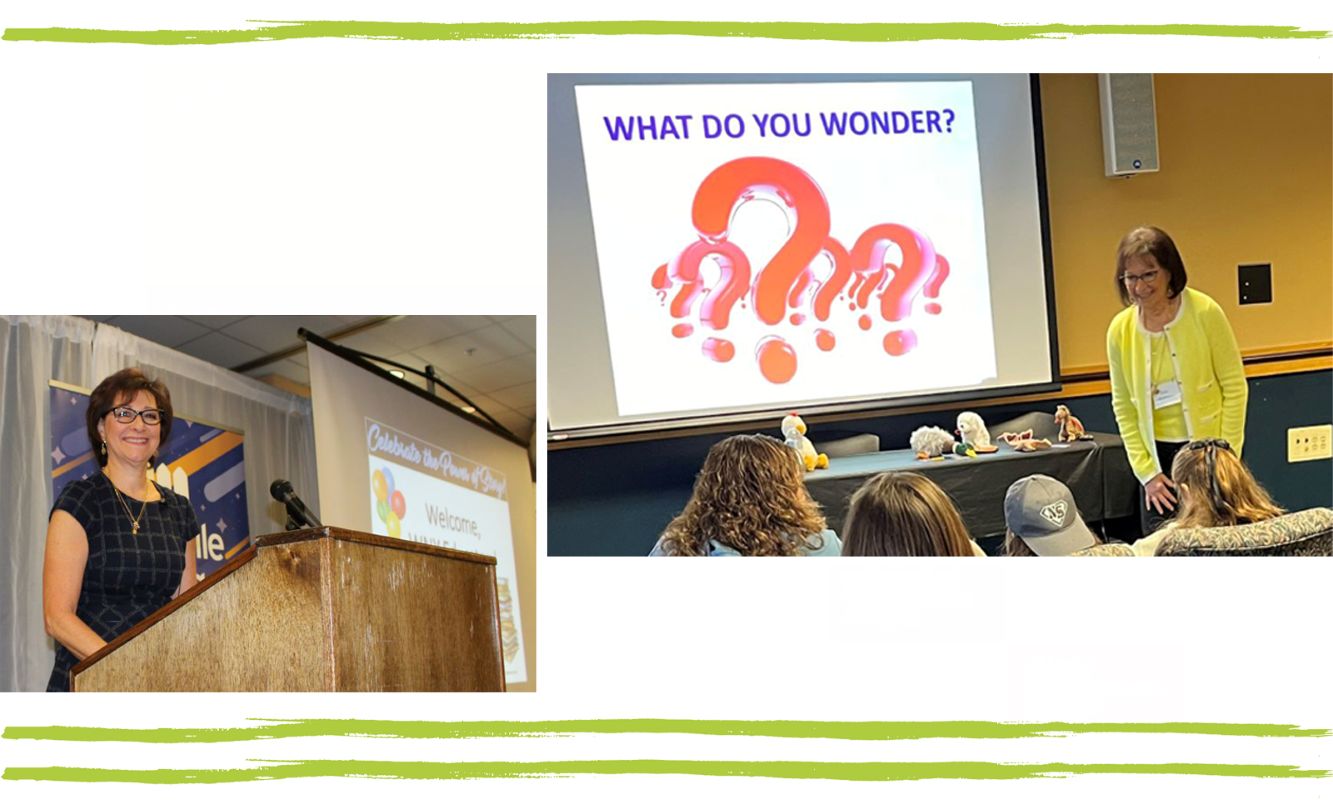
Small and large group presentations
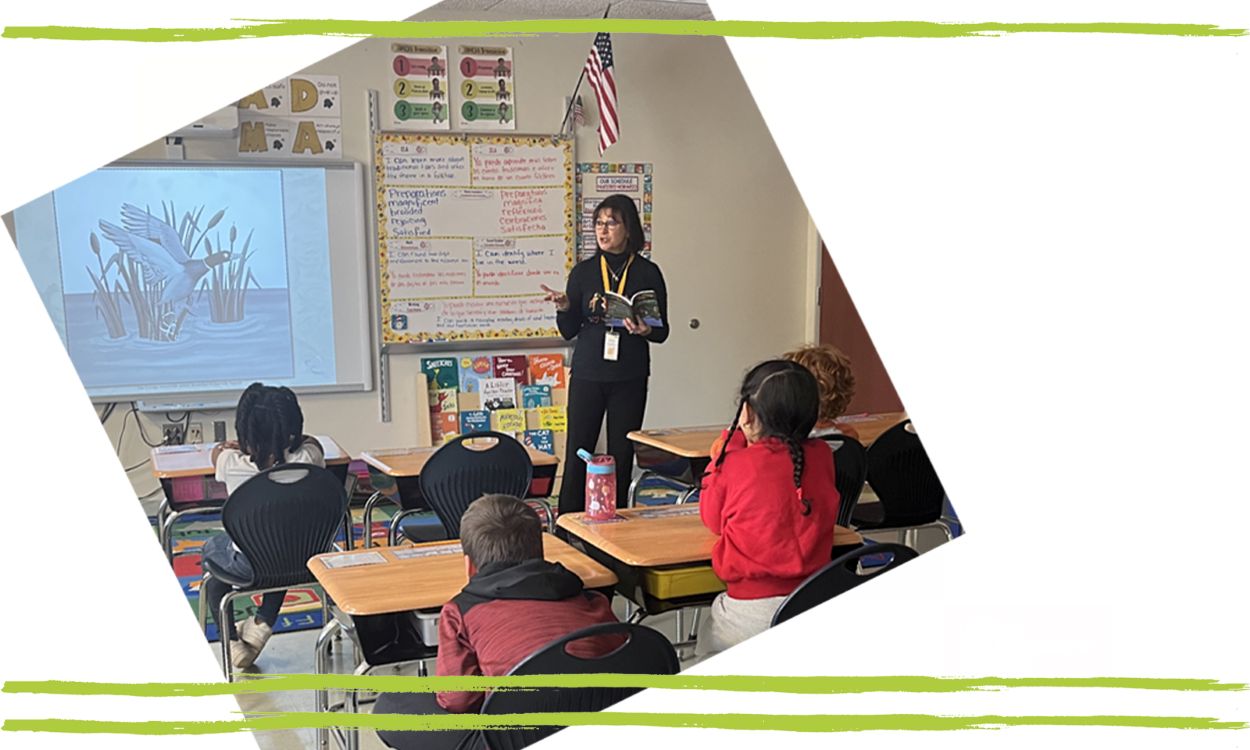
A note received following a recent school visit:
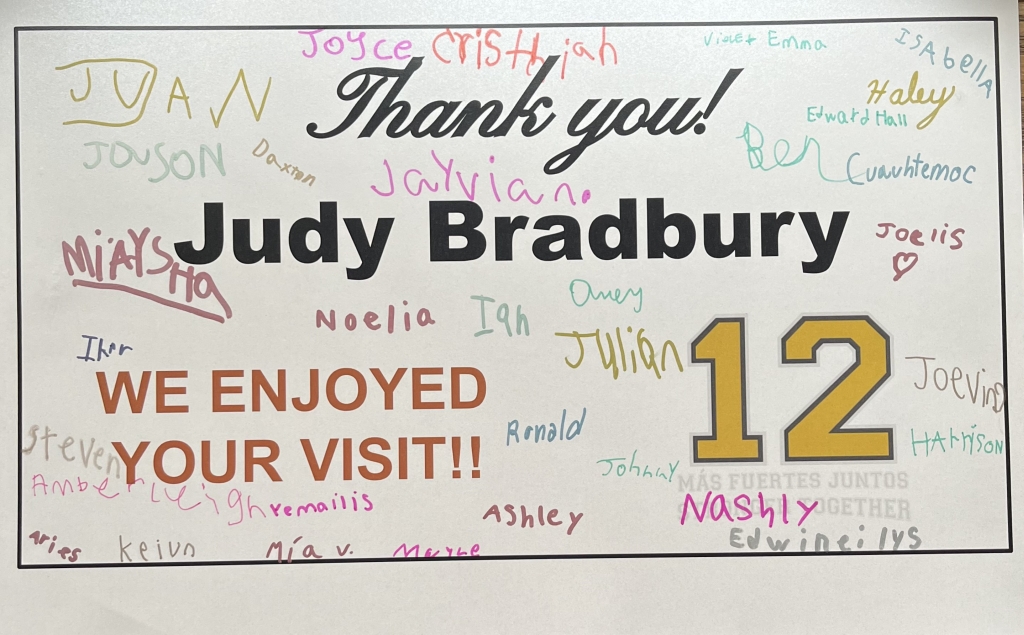
Thank you so much for coming to meet with my students. You were wonderful, answering their questions and explaining how you wrote the book. We all loved it! Here are some illustrated thank you notes the students made for you. Thank you again!
And here’s a note I received after presenting “SEL-Related Children’s Books with Curriculum Tie-Ins” to teachers and librarians of Grades Pre-K—Grade 6:
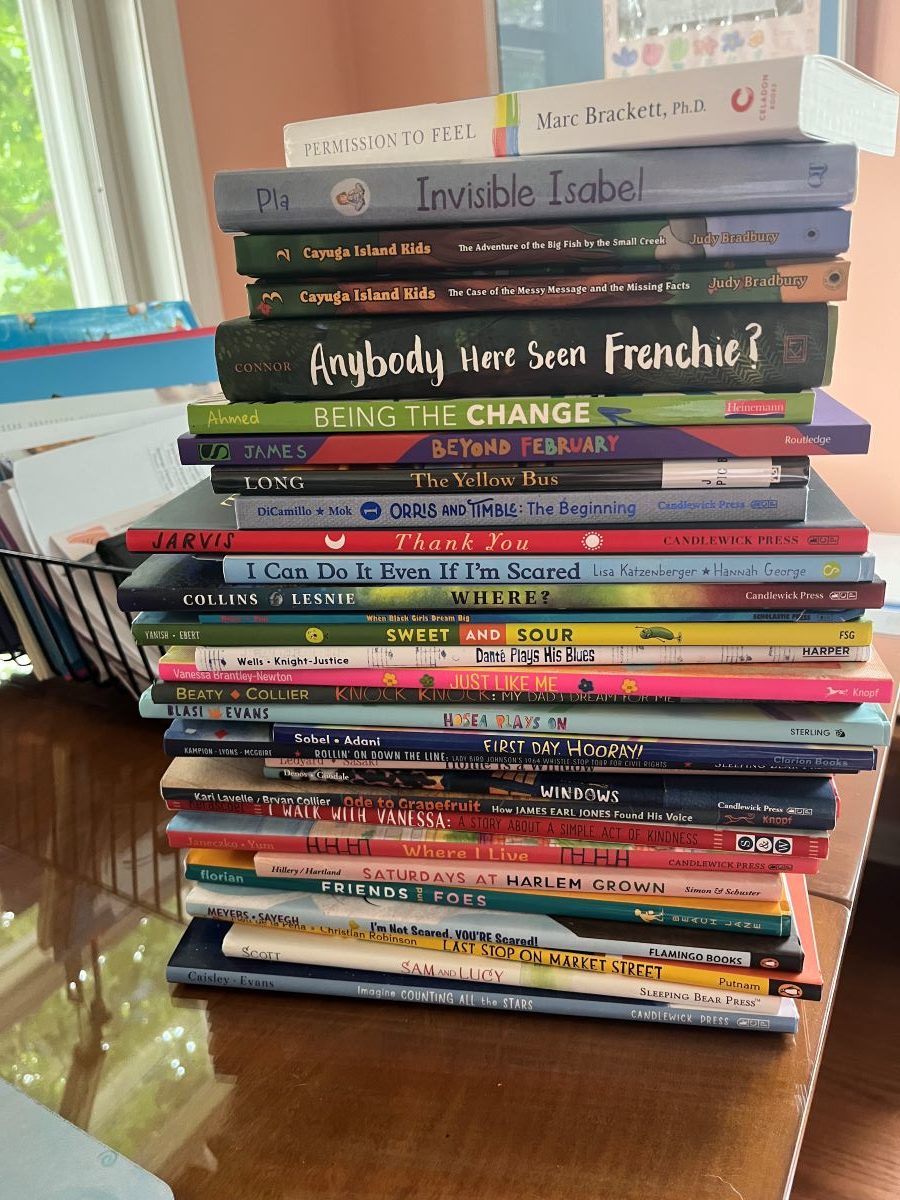
Thanks so much for presenting! I heard wonderful things about your workshop! One person mentioned to me that you were so organized and passionate. They also loved seeing all the children’s books you brought with you!
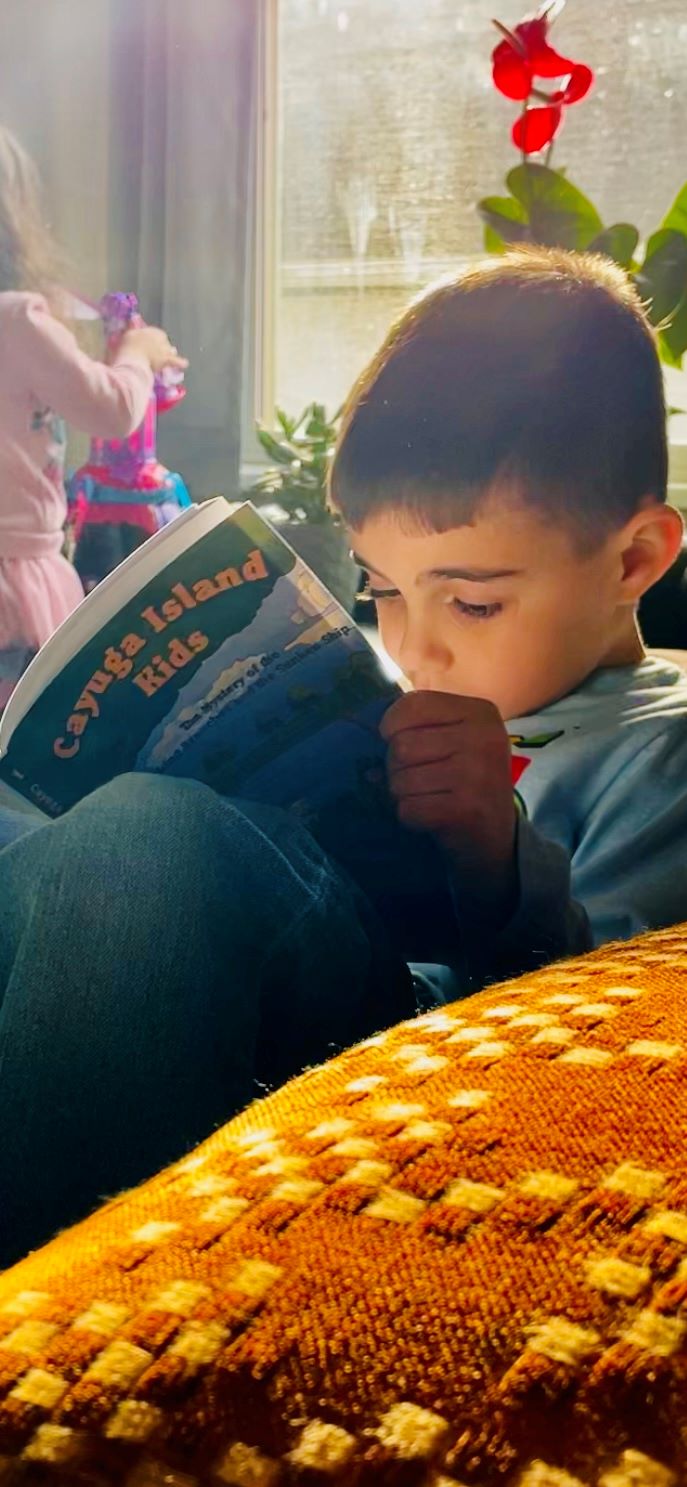
Find my books packaged as a series at your favorite bookseller. Individual titles are also available in hardcover, softcover, and e-book versions.
Kindness tip: If you read and like a book, consider posting a review on GoodReads, social media, or on Amazon (if you bought it there). Authors and illustrators appreciate the shout-out. Even a one-sentence comment increases visibility of a book. Also consider placing a request with your local library to purchase a copy–another free way to support a book you recommend!
Over to You…
Join the conversation! Offer your thoughts related to this month’s post in the Comments section below:
What book about neighborhoods stands out to you? Share the title, author, and suggested age or grade range.
You are also welcome to post a general comment.
Thanks for sharing!
Final Thought
“It’s a beautiful day in the neighborhood…“
~ Fred Rogers
That’s a wrap! Like what you’ve read today? Have Children’s Book Corner delivered to your inbox each month. Sign up for free! We never sell or share subscriber information.
0 Comments