
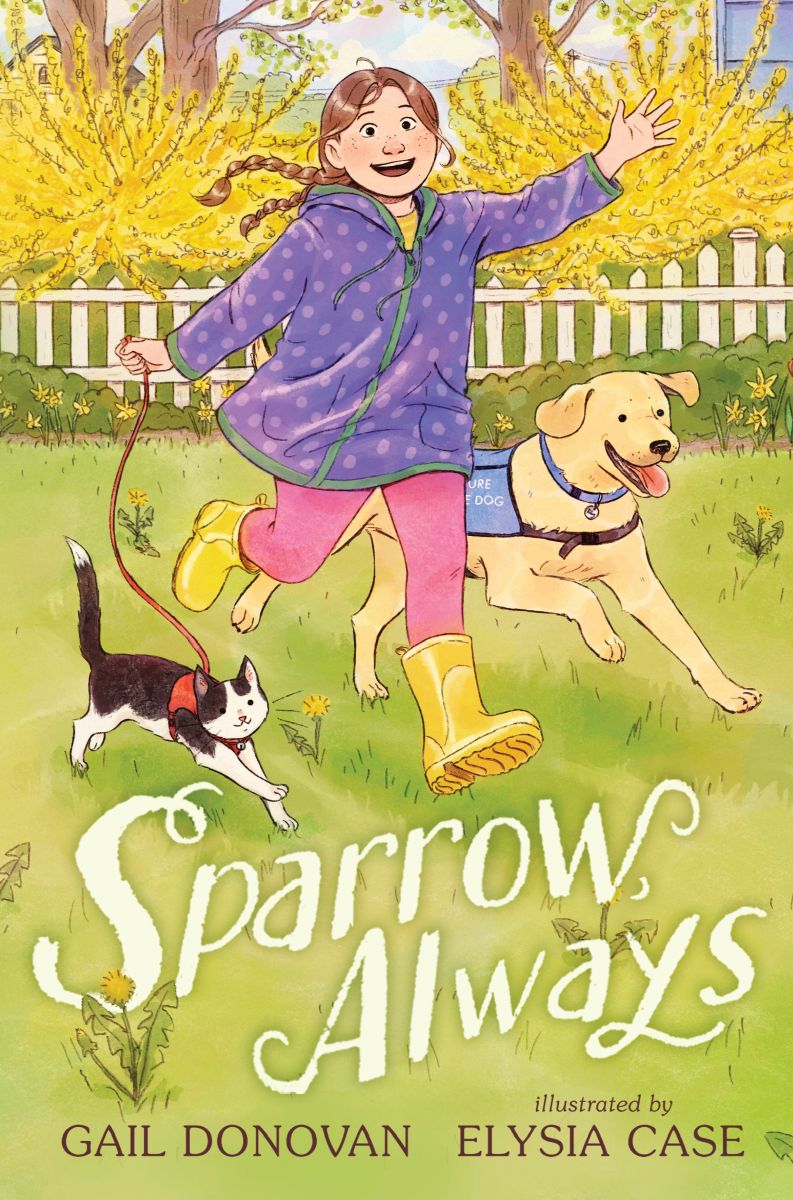
Sparrow, Always by Gail Donovan, illustrated by Elysia Case; Atheneum Books for Young Readers, 2025.
In the third book in The Sparrow Series for young middle graders, Sparrow helps train a neighbor’s pup as he works to become a guide dog. Along the way, she grows in self-control and cooperation. She helps a new friend feel seen. Best of all, she comes to appreciate that although she is different, she is valued and accepted, and that growing doesn’t have to mean changing who you are. (Note: Though this is the third book in the series, it can stand alone. The Sparrow books do not need to be read in order.)
“You’re going to grow up, but you don’t need to grow out of anything. You’ll grow into all the things that make you you. You’ll grow into yourself.”
~ Toby; Sparrow, Always
Why this book? Why will it matter to kids?
Readers will identify with Sparrow’s conflicts and relate to her endeavors to fit in and follow rules while also seeking to fulfill wishes and dreams. Most of all, they will cheer on this likeable, earnest character who demonstrates a kind and helpful nature as she navigates through stumbles and triumphs.
Why read aloud?
We gather to share a book. We settle into a safe space as we interact with the book. We talk and reflect, exchanging thoughts, exploring concepts, building background knowledge—and community. When read-aloud sessions are routine, children become comfortable voicing their perspectives. They grow in active listening skills and learn to respect the thoughts, feelings, experiences, and beliefs of others. When we (educators, parents, and caregivers) select age-appropriate, length-appropriate stories based on needs and abilities, we offer children the opportunity to see themselves, see others, find validation, and contemplate solutions to conflicts and challenges that they may not have considered.
Read-aloud sessions are inclusive: there is no reading skills or level barrier, and learning obstacles are mitigated by preparation prior to reading the book aloud. In a read-aloud session there is immersion as well as the comfort of distance from the challenges the characters encounter.
Reading aloud engages listeners, offering a positive, secure, stress-free “learning without struggle” experience grounded in a book, the value of which cannot be overestimated.
“You think your pain and your heartbreak are unprecedented in the history of the world, but then you read. It was books that taught me that the things that tormented me most were the very things that connected me with all the people who were alive, or who had ever been alive.” ~ James Baldwin
Levels and Layers of Learning
Grade level: 3-4
Social-Emotional Learning Themes
Acceptance, connection, courage, creativity, curiosity, dedication, diligence, effort, empowerment, encouragement, fortitude, friendship, generosity of spirit, gratitude, hope, inspiration, integrity, kindness, perseverance, persistence, perspective, relationship skills, resilience, resourcefulness, respect, responsibility, responsible decision-making, self-assurance, self-awareness, self-management, self-reliance, social awareness, tenacity, understanding
Content Area Connections: Social-Emotional Learning; Friendship; Pets; Community; Disability
Using This Book in the Classroom
Hit the Ground Running Ready Resources for Educators, Homeschoolers, and Parents
Learn more about Gail, The Sparrow Series, and her other books on her website.
Write Away! Ideas to prompt writing
Reading, writing, listening, and speaking form the core of literacy. In robust literacy instruction we aid students in strengthening the connections between these fundamental processes. Shared reading—and dynamic conversations about text—strengthens reading skills and leads to meaningful writing. Multiple strategies are employed in the process of gaining meaning from reading (background knowledge, text structure, sequence, detail, cause and effect, visualization, summarizing, synthesizing, perspective, and more) and we utilize these strategies in the process of writing. Reading skills support writing, and writing skills support reading.
“[There is} a deep connection between how students read, write, and communicate, and how they develop socially and emotionally.” ~ Justina Schlund, Director of Field Learning for CASEL
How would you describe Sparrow? What do you like about her? Would she make a good friend? Explain.
Do you know anyone like Sparrow? In what ways are they alike?
Sparrow’s parents say she “has her head in the clouds.” What does that mean? What scenes in the story show that Sparrow sometimes gets distracted or daydreams.
Sparrow loves animals. Do you? Describe a special animal in your life, or, describe an animal you would like to have as a pet. What qualities does it have? What does it look like? If you wouldn’t like to own a pet, tell why.
Mrs. K. teaches the friendship group to explore their feelings. Sparrow senses that sometimes her feelings are “too much.” What does that mean? What are some examples? How does Sparrow work on managing feelings throughout the story?
Thinking about the scenes with Mrs. K., what do you like best about them? How is Mrs. K. helpful to the kids in the group?
Sparrow has a star chart, and at first she doesn’t like it because she thinks it’s babyish. But then she learns that her dad keeps a star chart. He gives himself a star when he does things like sitting quietly for a few moments and being grateful. He does this because it helps him be more like he wants to be throughout the day. If you had a star chart, what would you give yourself a star for doing or not doing? Explain.
Sparrow thinks of herself as a “help giver.” She helps Toby with his training, and helpt to calm her baby brother. She wants to reach out to her classmate Orion, but has trouble doing so at first. Eventually, she demonstrates her friendship to him. How can you be a help giver?
Read “A Note to Readers” at the end of the book. How do you learn best? Explain how knowing more about yourself and your learning needs can help you “feel like you belong and still be your authentic self.”
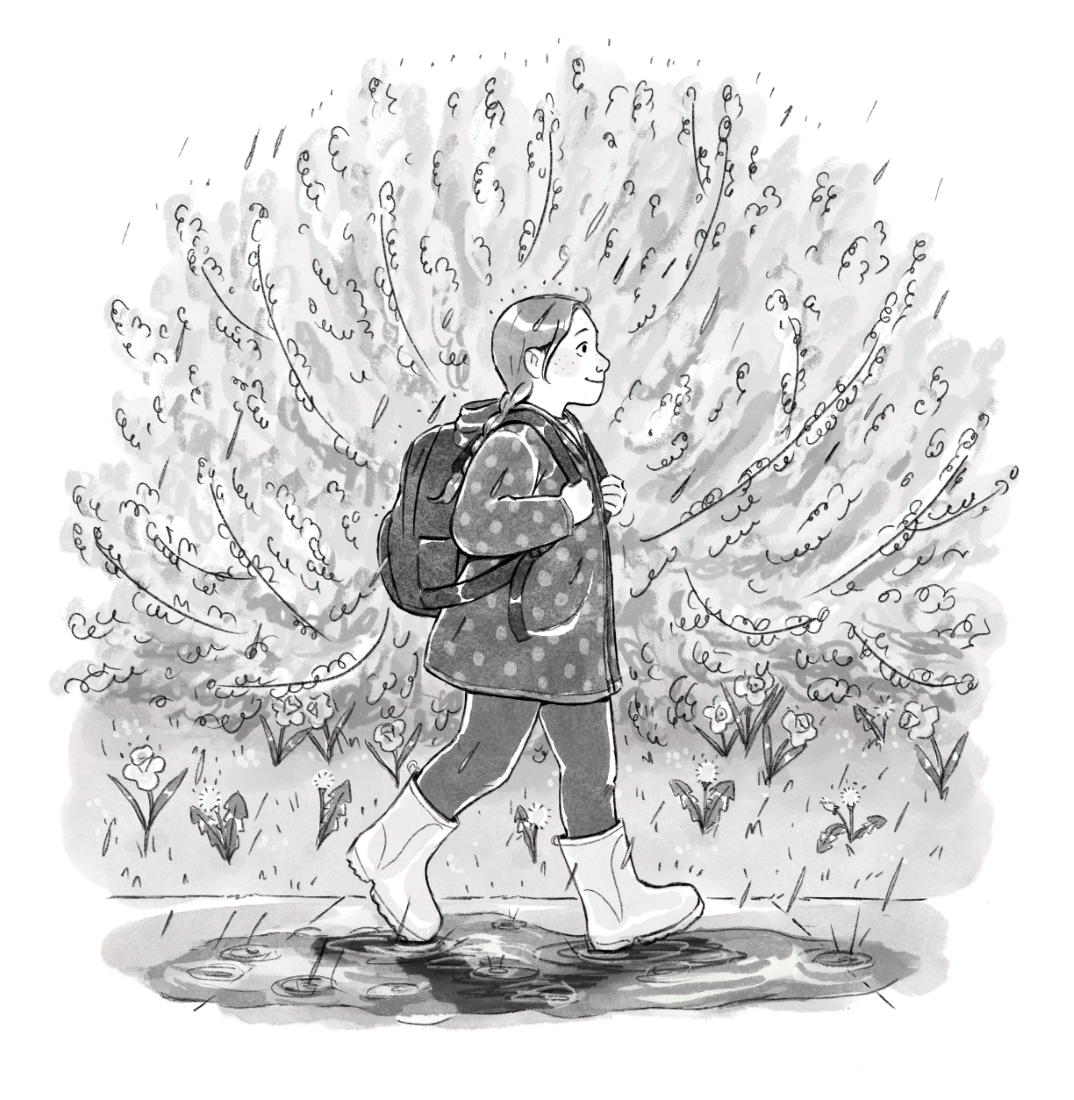
Illustration © Elysia Case
Poetry Break Related poetry to recite before or following the reading of this book
Poetry breaks fit perfectly into the framework of the school day. These brief moments can signal change, smooth or frame transitions—from beginning or ending the day to lining up for lunch; from zipping up backpacks and jackets to shifting from one subject to the next. Poetry breaks can reset mood or tone, providing a moment to pause, reflect, and breathe. Reading a poem aloud typically takes less than a minute, yet it can introduce or reinforce a concept, provide clarity, celebrate language, exemplify rhythm, enhance vocabulary, expand understanding, increase attention span, initiate reflection, spark imagination, or simply summon a giggle. And, poetry soothes and strengthens the spirit.
“Poetry builds resilience in kids and adults; it fosters Social and Emotional Learning. A well-crafted phrase or two in a poem can help us see an experience in an entirely new way.” ~ Elena Aguilar
Poetry Collections About Dogs
- Bark in the Park! Poems for Dog Lovers by Avery Corman, illustrated by Hyewon Yum
- Best In Show by David Elliott, illustrated by 18 Dog Lovers
- Bless Our Pets poems selected by Lee Bennett Hopkins, illustrated by Lita Judge
- Dogku by Andrew Clements, illustrated by Tim Bowers
- God Got a Dog by Cynthia Rylant, illustrated by Marla Frazee
- The Smell of a Wet Dog: And Other Dog Poems and Drawings by Barney Saltzberg
Recently Released Poetry
- Poems for Every Season: A Year of Haiku, Sonnets, and More by Bette Westera, illustrated by Henriette Boerendans, translated by David Colmer
Make poetry a part of every learning day! Check out 40 Poems for 40 Weeks: Integrating Meaningful Poetry and Word Ladders into Grades 3-5 Literacy, a handy poetry resource for educators edited by David L. Harrison and Tomothy V. Rasinski featured in this post on Children’s Book Corner.
And Then There’s This…
Enrichment activities, related books, online resources, craft projects, and ideas for further study
September is National Guide Dog Month in the USA, honoring the work of guide dogs, raising awareness of those who are blind or visually impaired, and supporting the work of guide dog training organizations.
Learn more about guide dogs on these online sites:
- Guide Dogs for the Blind
- Guide Dogs of America
- Guide Dog Resources
- Guiding Eyes for the Blind (Thanks to writer friend, Carol, for this suggestion!)
- YouTube video: Kids Meet a Guide Dog for the Blind
- The Seeing Eye Children’s Video
- The Journey of a Guide Dog Documentary 11 videos
Book Collection Suggestions
Reading multiple books on a topic allows for deeper understanding and connection. Students’ knowledge base expands, comprehension increases, critical thinking sharpens, conversations deepen, and writing becomes more meaningful.
Chapter Books and Middle Grade Novels About Dogs:
- A Collie Called Sky by Helen Peters, illustrated by Ellie Snowdon
- Ada Twist and the Disappearing Dogs by Andrea Beaty and David Roberts, illustrated by Jennifer Naalchigar
- A Home for Goddesses and Dogs by Leslie Connor (see previous Children’s Book Corner post for interview and resources)
- Smart Dog by Vivian Vande Velde
- They Call Me No Sam! by Drew Dawalt, illustrated by Mike Lowery; see also No Sam! And the Meow of Deception
- Walkin’ the Dog by Chris Lynch
See also the picture book, Trouble Dog: From Shelter Dog to Conservation Hero featured on this previous Children’s Book Corner post.
Have a title to suggest? Scroll down to add it in the Comments section at the end of this post.
Illustration © Elysia Case
Feel free to share this post with anyone you think might be interested: teachers, librarians, counselors, homeschoolers, parents, or authors. Want to receive the latest post each month? It’s free! Just sign up here. We never sell or share subscriber information.
Meet the Author
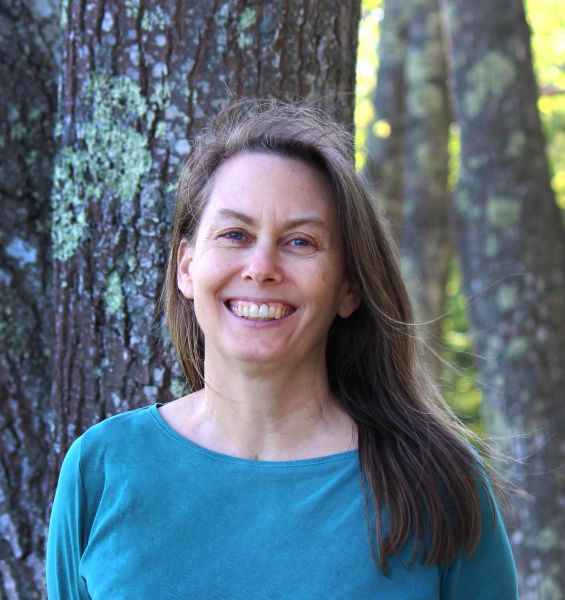
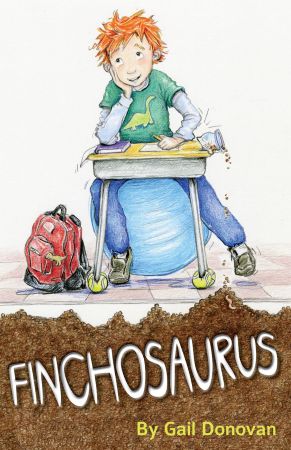
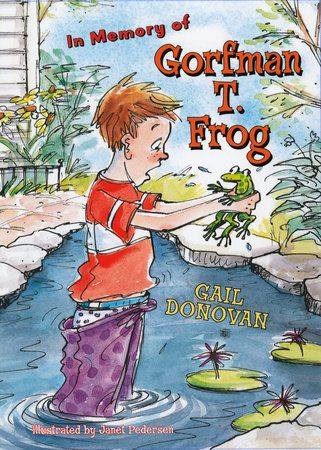
Gail Donovan was fired from her first job in an ice cream shop for making the sundaes too big. She now works in a library and writes middle grade novels, including In Memory of Gorfman T. Frog, named to the New York Public Library’s 100 Titles for Reading and Sharing list; Finchosaurus, winner of the Moonbeam Children’s Book Award; as well as the series including Sparrow Being Sparrow (Publishers Weekly, starred review), Sparrow Spreads Her Wings (Maine Literary Award winner for Young People’s Literature), and Sparrow, Always. She has also written for the Rainbow Fish & Friends picture book series based on the bestselling work of Marcus Pfister. Donovan lives on the coast of Maine, where she jumps in the ocean all year round.
Backstory: Q & A with Gail Donovan
It is my pleasure to introduce you to Gail and her heartwarming series about Sparrow. I received a review copy of the third book in the series and when I read it I was captivated by the authentic character she has created, the well-crafted writing, and the positive themes. I choked up at the end of the story, and I bet you will, too.
Judy Bradbury: Tell us about this series: What seeded its creation? How did you conceive of the theme/focus of the Sparrow books? How did you land on the theme for each book?
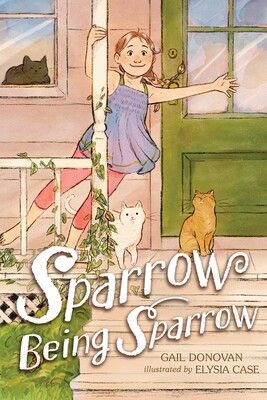
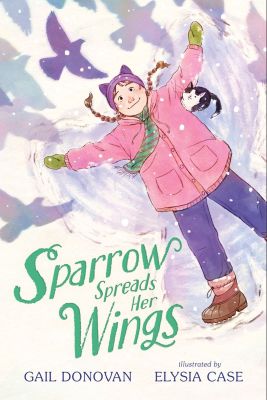
Gail Donovan: The series came about after a round of rejections for the first book— at that time, the only book— Sparrow Being Sparrow. My agent said, “I really think we could place this if I could pitch it as a series. Why don’t you come up with a couple more ideas for the character?” That was scary for me. I wasn’t sure if I could do it. But I was determined to find a home for Sparrow, an intense, passionate kid who cares deeply about animals. Since the original story revolved around Sparrow’s quest to care for her neighbor’s seven cats after the neighbor is injured, I realized that subsequent books could each revolve around a different animal story. I worked up ideas for two more books: Sparrow Spreads Her Wings, in which Sparrow discovers an injured bird during a winter storm; and Sparrow, Always, in which Sparrow desperately wants to help a new neighbor who is raising a puppy to be a future guide dog. My agent sent the manuscript around again with the pitch that it could be a series, and it worked!
JB: Tell us about how you decided on the traits Sparrow possesses, her passions, and the personal challenges she faces.
When I am going to begin something new, I always ask myself, who is the character whose story needs to be told— by me? I was on the lookout for a new character, wondering who they would be, when I was asked to visit a library’s Smart Girls Read book club. Later I wrote in my journal, “The girls were fabulous. We sat for 45 minutes as they ate pie and ice cream and we chatted about books and writing. I had a feeling of wanting to write a book for them— those particular eager, interested, curious girls.”
So that was the first thing I knew about who my new character would be. She’d be a girl. Obviously, that wasn’t enough! I kept waiting for something more specific to come to me.
One evening I lay in bed, falling asleep, thinking about the new character. The girl. At some point in the night I woke up with the words in my mind: TOO MUCH. She could be a girl who feels things too much, gets too excited. I thought, that could be it— her characteristic, and drifted back to sleep. Sometime later, I woke up again. Where was I? Oh, yes— too much. Rambunctious, perhaps. Okay, yes, back to sleep.
I woke again and again with the same thoughts. My brain was telling me: don’t forget. After the third or fourth time, I realized that my brain was not going to let me rest, so I got out of bed. The awkward thing was, the weather was hot and I had been sleeping without anything on. So there I was at two in the morning, stark naked, scribbling down the words so I wouldn’t forget: Too much. Too excited. Runs. Rambunctious. What might happen?
I love this story of the genesis of Sparrow’s character, because it feels like a gift that was given to me. And when you have a character who “feels things too much,” you know she will butt up against how the world wants her to behave. You know you have a story.
JB: Tell us about a challenge you faced in the creation of Sparrow, Always, or provide a memorable (or humorous!) anecdote related to the writing of the book.
GD: An early reader of the first Sparrow manuscript asked, “Did you mean for her to be autistic?” I was so surprised! I hadn’t had that in mind at all; I was simply trying to write about this particular, passionate kid. However, I could see what the questioner meant. Sparrow has many traits that would fit a diagnosis of being on the autism spectrum.
The question— to name, or not to name? — became a big challenge that my editor and I wrestled with in all three books. I acknowledged that if I described Sparrow as being on the autism spectrum, kids with the same diagnosis might feel hugely seen and validated. But I knew that words can also be limiting; if a kid didn’t identify with that label, maybe they wouldn’t feel seen. In the end, I wanted it to be a story for any kid who struggles with feeling misunderstood, so I decided not to point directly to the word autism as I told Sparrow’s story.
Illustration © Elysia Case
JB: What is one unexpected joy that came from the creation of Sparrow, Always?
A little girl from Indiana named Isabelle had sent me a letter saying how much she loved Sparrow Being Sparrow, and we continued to correspond. She sent me a drawing, and I was able to send her a “sneak peek” of the interior art of Sparrow Spreads Her Wings before it came out. Right around this time I was wrapping up edits on Sparrow, Always. There’s a scene in the book where happy birthday wishes are being read aloud during school announcements, and I included Isabelle’s name. It was a joy to imagine her reading the book and coming across her name.
JB: What would surprise readers to learn about you or about the writing of Sparrow, Always?
GD: People often assume that an author can relate to a character because they are similar. But while Sparrow is an intense, passionate kid whose feelings can land her in trouble, I was a more quiet, bookish kid who didn’t go “out of bounds” very much.
JB: Who do you perceive your target audience to be and why?
GD: I think this book is great for five-to-seven-year-olds who love being read to, or seven-to-ten-year-olds making the leap into reading on their own.
JB: What do you hope young middle grade readers will take away from Sparrow, Always?
GD: I hope kids will take away and keep with them the sense of what Sparrow experiences in Sparrow, Always: what it feels like to go from feeling misunderstood to feeling understood, and then from understood to accepted, and finally from accepted to cherished.
JB: If you could ask your young audience a question, what would it be?
GD: Now that my own kids are grown, I don’t have easy access to stories from school, so I’d probably sneak in a question that would help me with writing classroom scenes, such as, “What assignment did your teacher give that you didn’t like doing, and why?”
JB: What project(s) are you currently working on?
GD: I’m currently working on a novel about a boy who daydreams all the time.
JB: What is one question you wish I had asked, and what is your answer?
GD: What is your favorite scenario for reading? To which I’d say, sitting in the zero-gravity chair on my patio in September when the weather is perfect, and rereading an old favorite, like Little Women.
Let me thank you again for this opportunity. What a tremendous labor of love you have created, and I’m honored to be on it.
Illustration © Elysia Case
Meet the Illustrator of The Sparrow Series
Elysia Case is an illustrator located in the Finger Lakes region of New York State. Find her on Instagram.
Other Books by Gail Donovan
Sidebar Spotlight New releases of note
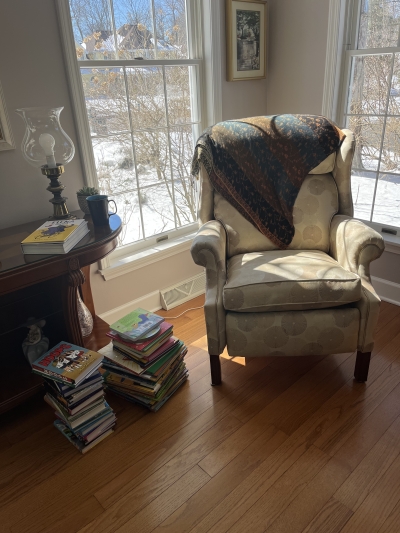
Each month I receive several boxes of books to review from various publishers. As I read and peruse the books, I place them in two piles: those that I will consider featuring on the blog, and those that don’t fit the mission or theme of Children’s Book Corner blog for whatever reason. I highlight books in the “possible” pile on most Mondays on Instagram and Bluesky. Ultimately, I choose the one new release I will feature on my monthly blog post. Yet there are many terrific books I wish I could give a shout-out to, even if I can’t write an entire post about each one. So, Sidebar Spotlight is a means of giving a nod to new releases that, in my opinion, are noteworthy. I’ve linked each title to Bookshop so you can learn more. Happy reading, friends! And feel free to comment on these or other new books in the Comments section at the end of this post.
The Snowball Fight by Beth Ferry and illustrated by Tom Lichtenheld is a fresh, fun snow day picture book with rhyming text that flurries across icy blue pages amid snowballs, downhill adventure, and warm, yummy treats. For those in snowy places, like those of us in Western New York, this book is sure to be a keeper.
Thanks for reading Children’s Book Corner! If you would like monthly posts delivered free to your inbox, sign up here. We never sell or share subscriber information.
News, Updates, & Items of Interest
The 2026 Youth Media Awards have been announced! Find the complete listing of winners and honorees on the American Library Association website.
Lerner Books is offering free read-alouds each week throughout the month. Dubbed as Fiction February, this offering provides free access to video read-alouds featuring “imaginative, discussion-ready stories, perfect for classroom lessons, morning meetings, library programs, or independent reading inspiration.” Register once to receive weekly emails on Sundays with read-aloud links and classroom activities.
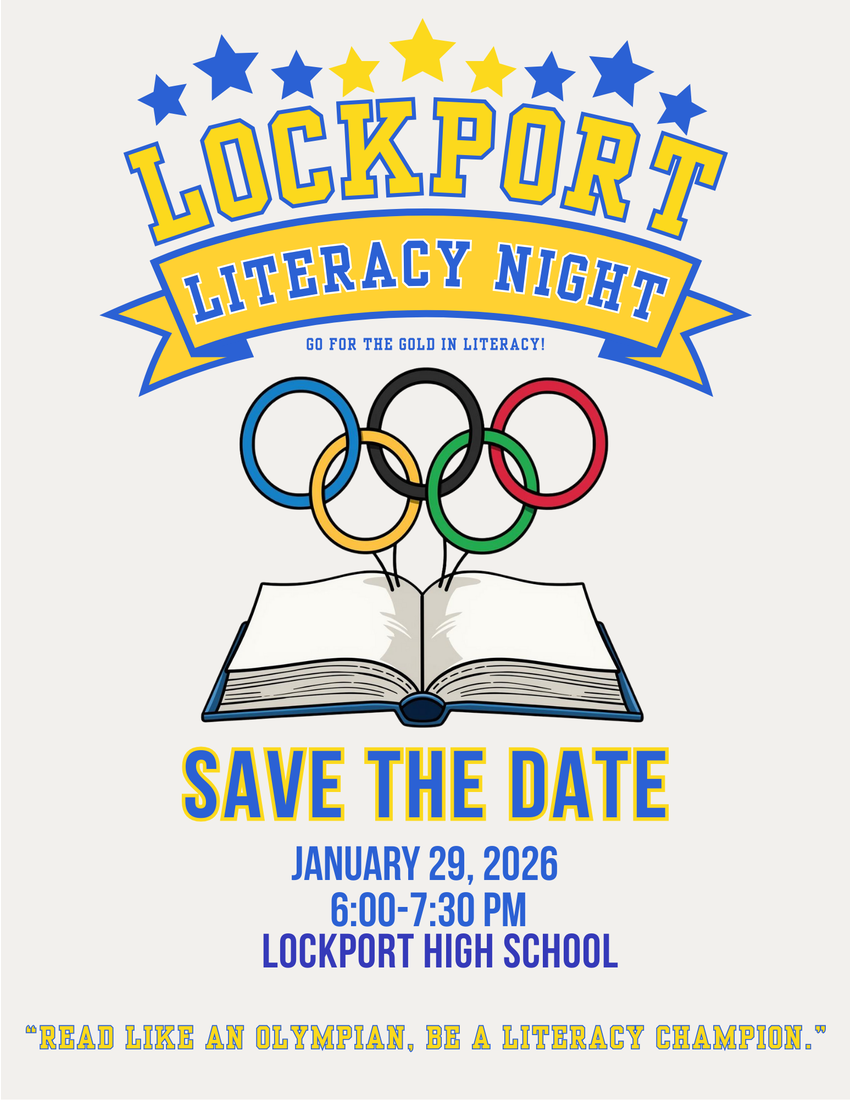
Due to inclement weather, the Family Literacy Night for Lockport Central School District students and families shceduled for January 29th was postponed. A new date is to be determined.
Find more information about where my books and I will be on my Events page.
You can find me online at Instagram, Bluesky, and LinkedIn where I post about books, book-related items of interest, Little Free Libraries, and occasionally travel (on IG). Connect with me there!
I am currently booking school visits and professional development sessions for the Spring semester of the 2025-26 school year. Find information and contact me to discuss a visit tailored to meet your school’s needs.
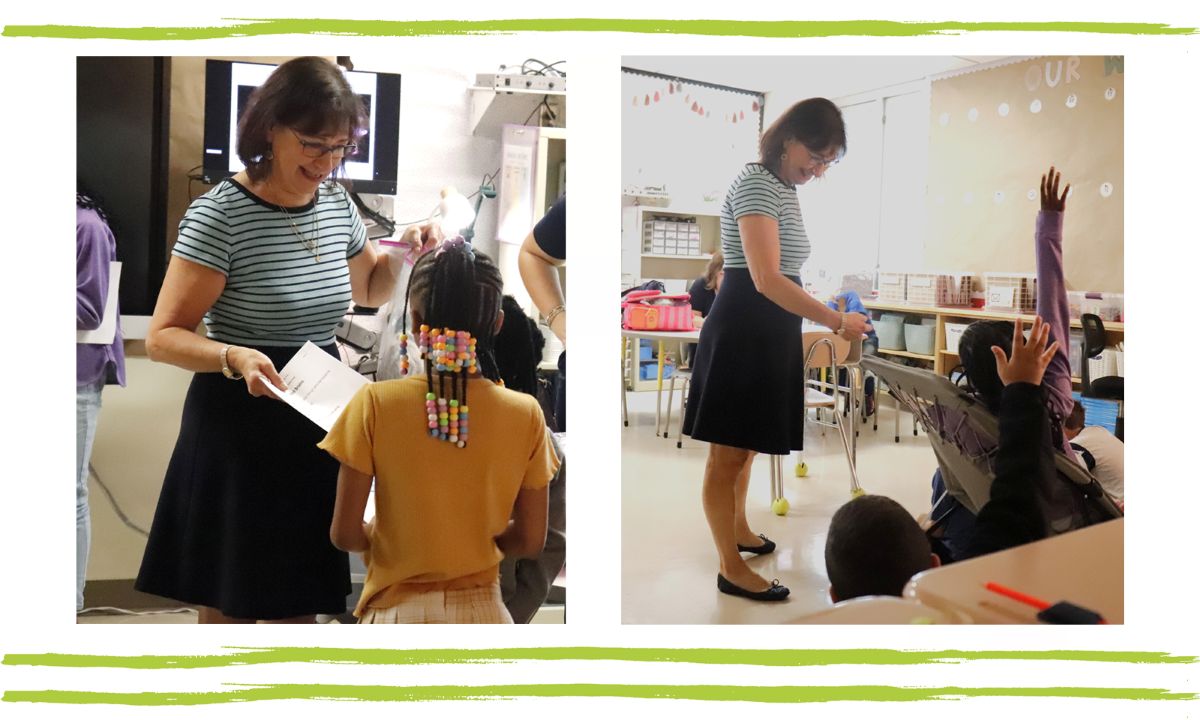
Photo credit: Jody LaRose
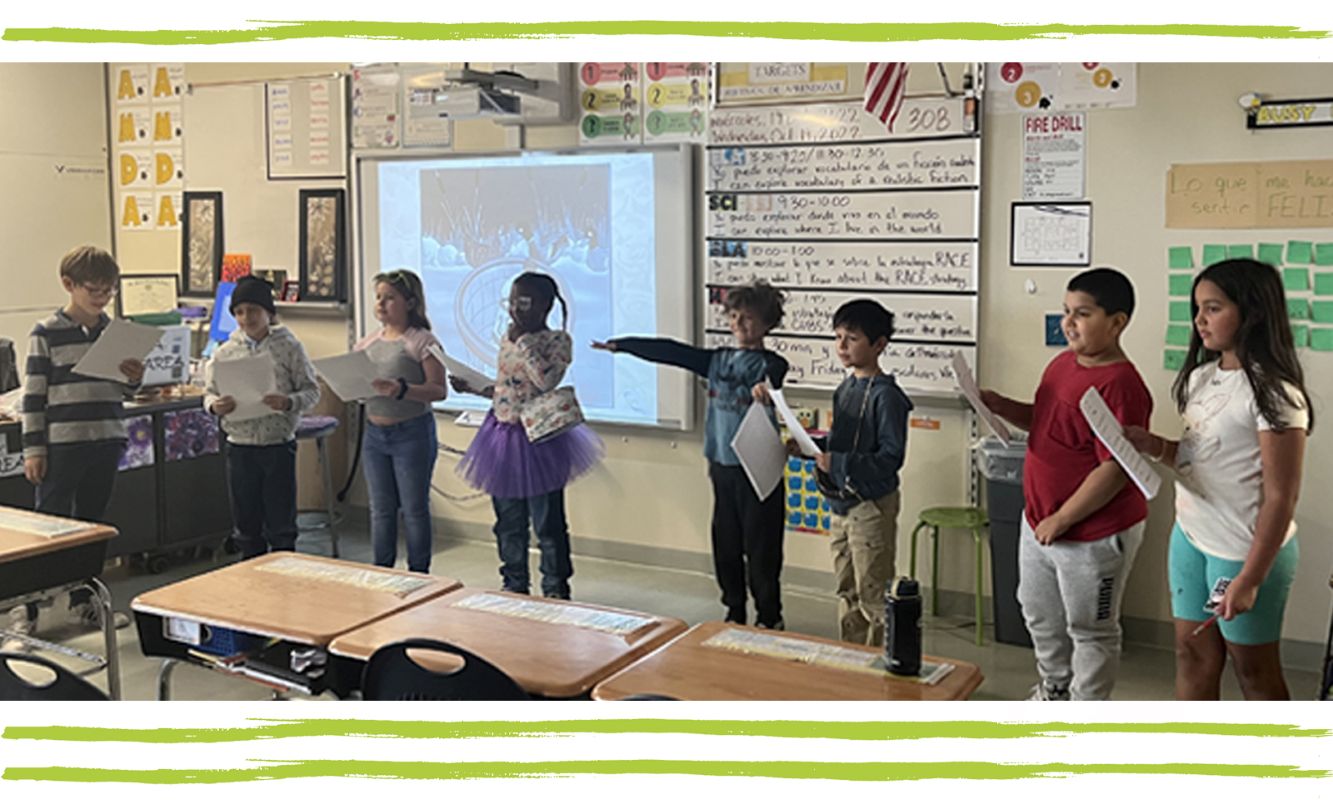
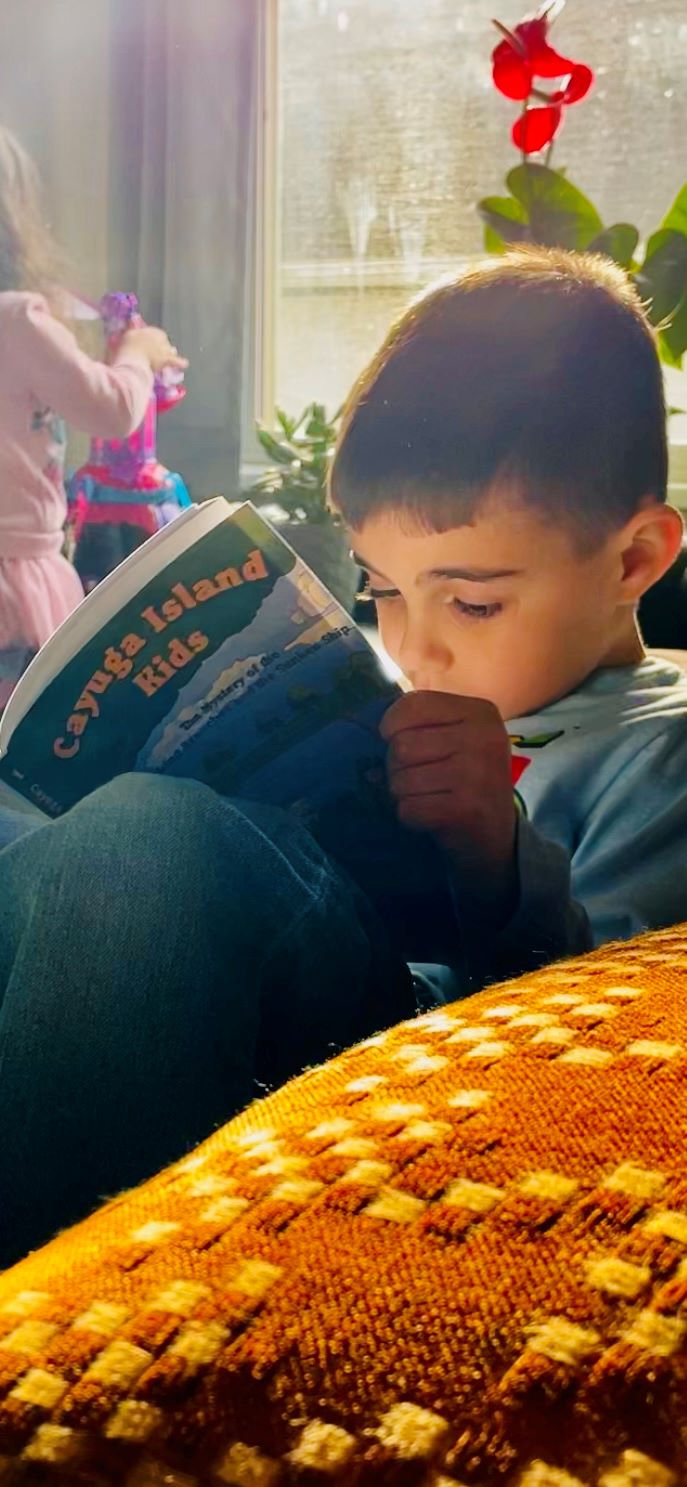
Readers Theater with props! Cayuga Island Kids Book 2, The Adventure of the Big Fish by the Small Creek
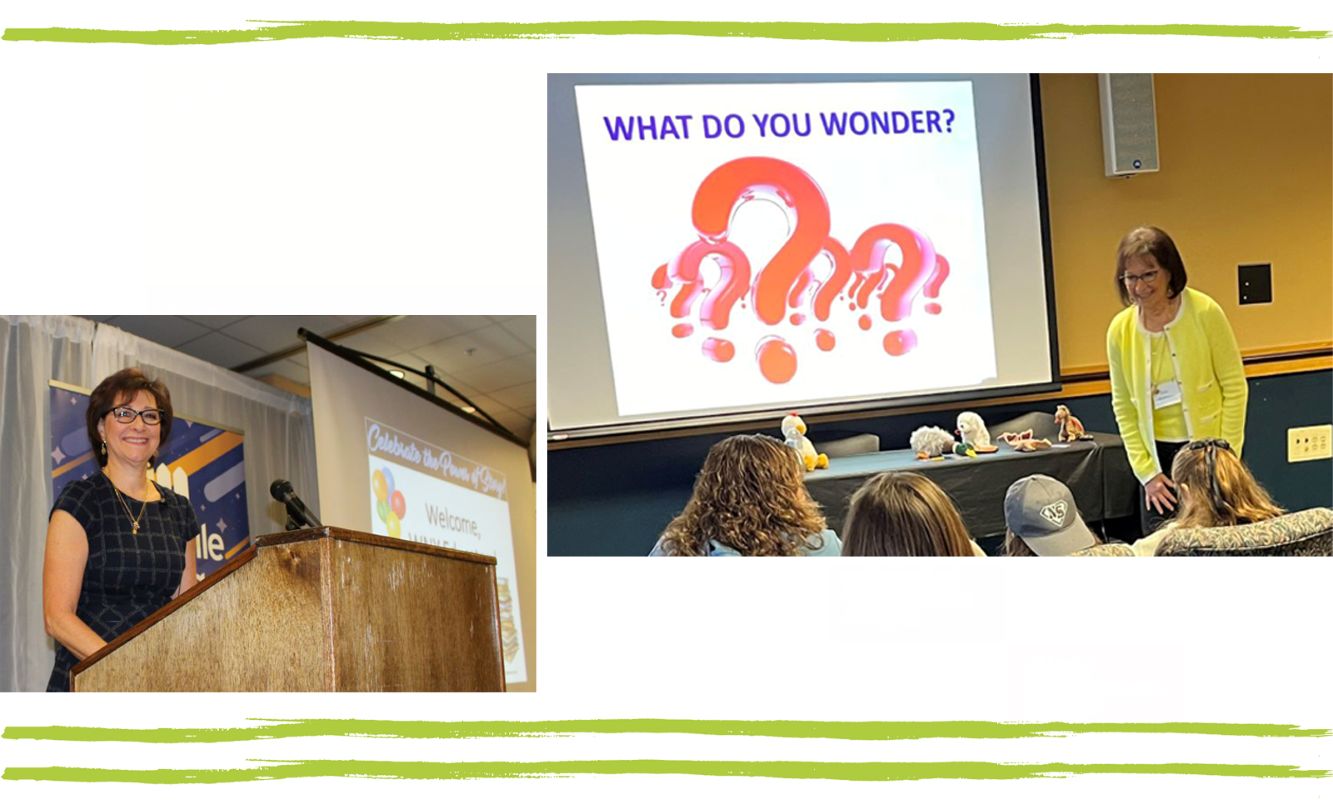
Small and large group presentations
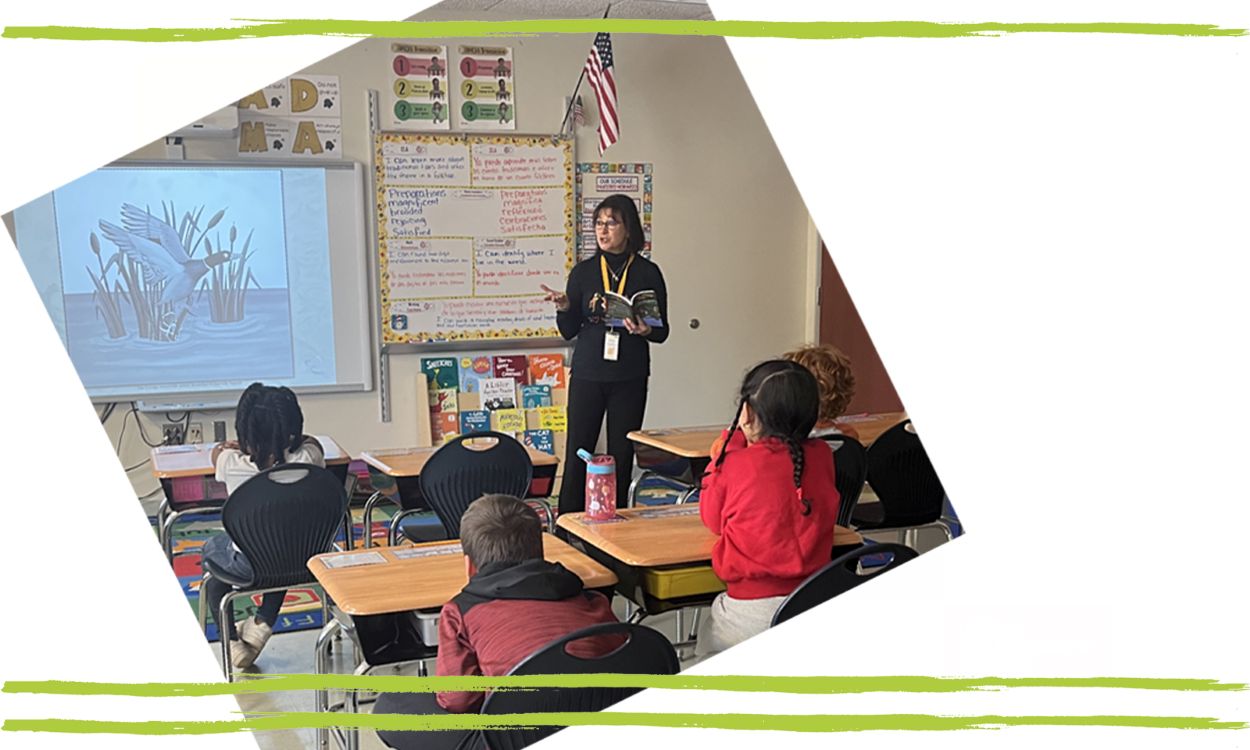
A note received following a recent school visit:
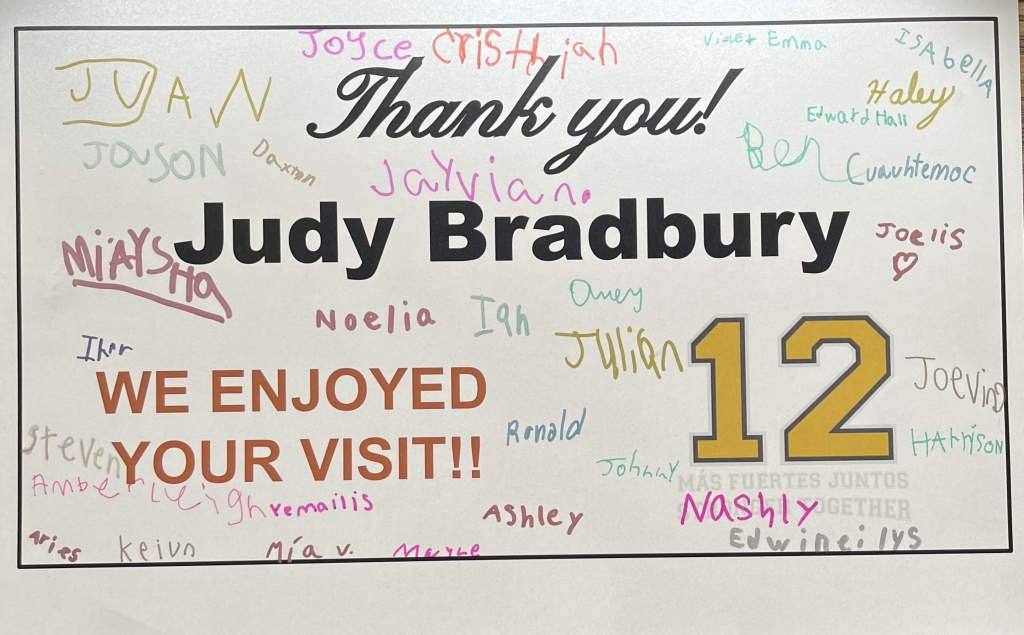
Thank you so much for coming to meet with my students. You were wonderful, answering their questions and explaining how you wrote the book. We all loved it! Here are some illustrated thank you notes the students made for you. Thank you again!
And here’s a note I received after presenting “SEL-Related Children’s Books with Curriculum Tie-Ins” to teachers and librarians of Grades Pre-K—Grade 6:
Thanks so much for presenting! I heard wonderful things about your workshop! One person mentioned to me that you were so organized and passionate. They also loved seeing all the children’s books you brought with you!
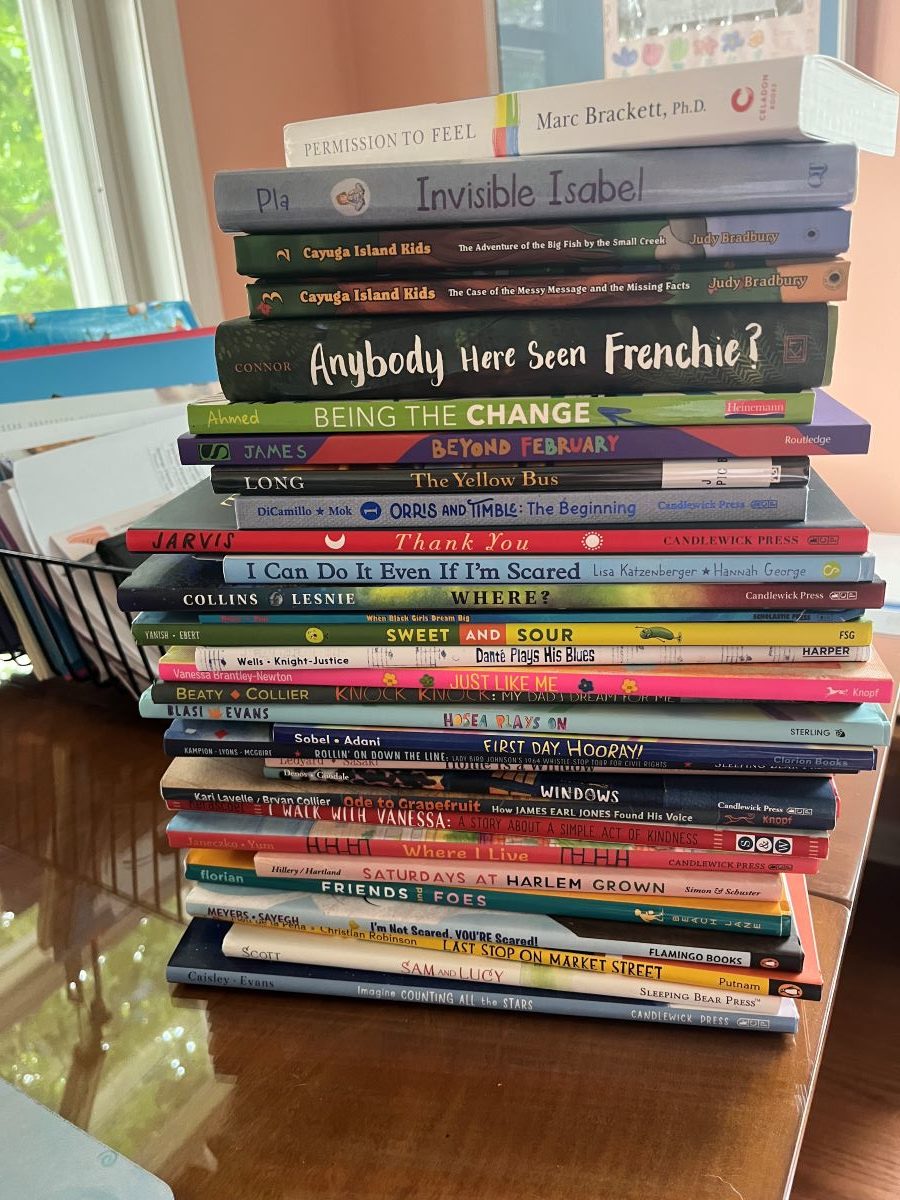
Find my books packaged as a series at your favorite bookseller. Individual titles are also available in hardcover, softcover, and e-book versions.
Kindness tip: If you read and like a book, consider posting a review on GoodReads, social media, or on Amazon (if you bought it there). Authors and illustrators appreciate the shout-out. Even a one-sentence comment increases visibility of a book. Also consider placing a request with your local library to purchase a copy–another free way to support a book you recommend!
Over to You…
Join the conversation! Offer your thoughts related to this month’s post in the Comments section below:
Do you have a book about dogs and their special qualities you can recommend? Or can you recommend a book about a child struggling with school and/or learning? Share the title, author, and suggested age or grade range.
You are also welcome to post a general comment.
Thanks for sharing!
Final Thought
“Never let the fear of striking out get in your way.”
~ attributed to Babe Ruth
That’s it for this month! Like what you’ve read today? Have Children’s Book Corner delivered to your inbox each month. Sign up for free! We never sell or share subscriber information.
Oh, I love this main character! Such a genuine and fun girl. (I have a little girl very much like Sparrow in my life.) I loved Gail’s story about she developed Sparrow’s character. As an author, I love how characters give us that “tap on the shoulder” and start telling us about themselves. Thank you, Gail, for sharing. And thank you, Judy, for introducing this story and author.
Thank you, Deb! I am so glad the story was meaningful for you.
I agree, Deb, that Sparrow is an authentic and relatable character. I was immediately drawn to her and to Gail’s storytelling. I’m so glad you enjoyed the book, and the post, too! Thanks for sharing.