
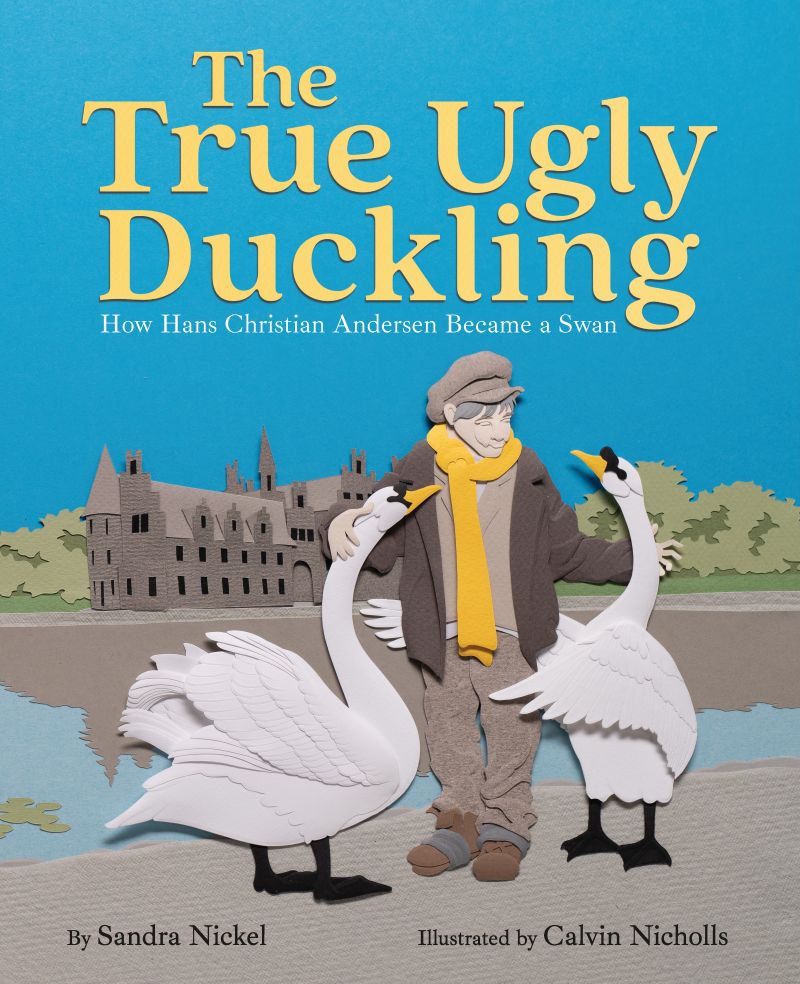
The True Ugly Duckling: How Hans Christian Andersen Became a Swan by Sandra Nickel, illustrated by Calvin Nicholls; Levine Querido, 2026.
Stunning cut-paper art reflecting the anchor of Hans Christian Andersen’s life accompanies this picture book biography ideal for middle graders. Throughout a life plagued by challenges and rejection, Andersen, whom scholars believe was on the autism spectrum, found a way to compensate for defeat and disappointment through art created with scissors and scraps.
“My life will be the best illustration of all my work.”
~ Hans Christian Andersen
Why this book? Why will it matter to kids?
Told in the style of a fairy tale, this stand-out biography brims with examples of Andersen’s fortitude in the face of ridicule and failure. Readers will experience Andersen’s triumphs that came from pursuing his passions and believing in himself despite bruising hardships.
Why read aloud?
We settle into a safe space as we gather to share a book. As we reflect, exchange thoughts, and explore concepts, we are building background knowledge—and community. When read-aloud sessions are routine, children become comfortable voicing their perspectives. They grow in active listening skills and learn to respect the thoughts, feelings, experiences, and beliefs of others. When we (educators, parents, and caregivers) select age-appropriate, length-appropriate stories based on needs and abilities, we offer children the opportunity to see themselves, see others, find validation, and contemplate solutions to conflicts and challenges that they may not have considered.
Read-aloud sessions are inclusive: there is no reading skill or level barrier, and learning obstacles are mitigated by preparation prior to reading the book aloud. In a read-aloud session there is immersion as well as the comfort of distance from the challenges the characters encounter.
Reading aloud engages listeners, offering a positive, secure, stress-free “learning without struggle” experience grounded in a book, the value of which cannot be overestimated.
“You think your pain and your heartbreak are unprecedented in the history of the world, but then you read. It was books that taught me that the things that tormented me most were the very things that connected me with all the people who were alive, or who had ever been alive.” ~ James Baldwin
Levels and Layers of Learning
Grade level: Grades 3-5
Social-Emotional Learning Themes
Acceptance, connection, courage, creativity, curiosity, dedication, diligence, effort, empowerment, encouragement, fortitude, friendship, generosity of spirit, gratitude, hope, inspiration, integrity, kindness, perseverance, persistence, perspective, relationship skills, resilience, resourcefulness, respect, responsibility, self-assurance, self-awareness, self-reliance, social awareness, tenacity, understanding
Content Area Connections:
Social-Emotional Learning, ELA, Biography, Tales
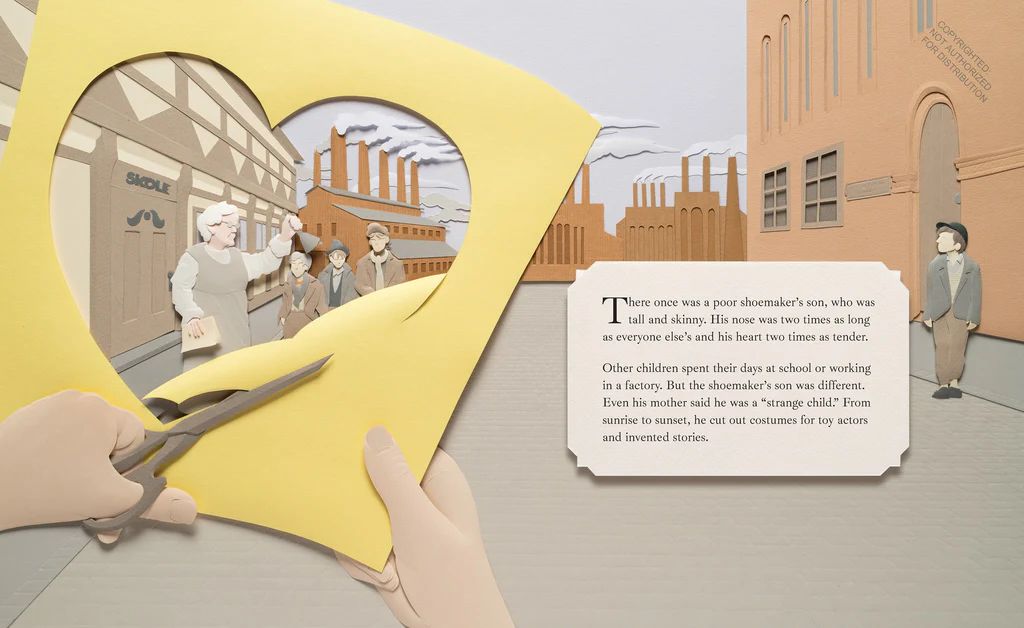
Illustration © Calvin Nicholls
Using This Book in the Classroom
Hit the Ground Running Ready Resources for Educators, Homeschoolers, and Parents
Learn more about Sandra and her books.
View examples of Calvin’s paper art.
A classroom guide for The True Ugly Duckling is available on Sandra’s website.
Write Away! Ideas to prompt writing
Reading, writing, listening, and speaking form the core of literacy. In robust literacy instruction we aid students in strengthening the connections between these fundamental processes. Shared reading—and dynamic conversations about text—strengthens reading skills and leads to meaningful writing. Multiple strategies are employed in the process of gaining meaning from reading (background knowledge, text structure, sequence, detail, cause and effect, visualization, summarizing, synthesizing, perspective, and more) and we utilize these strategies in the process of writing. Reading skills support writing, and writing skills support reading.
“[There is} a deep connection between how students read, write, and communicate, and how they develop socially and emotionally.” ~ Justina Schlund, Director of Field Learning for CASEL
How would you describe Hans Christian Andersen? What do you like about him? Explain.
Did you know anything about Hans Christian Andersen before reading this book? What is a favorite fact you learned about Andersen from this biography?
What else would you like to know about Hans Christian Andersen? What is one question you would ask Andersen if you had the chance?
What is your favorite tale by Hans Christian Andersen? Why?
Which illustration in the book is your favorite? Why?
The following prompts are inspired by responses from Sandra and Calvin to one of the interview questions (see interview below):
Hans Christian Andersen said The Ugly Duckling was the story of his life. Which fairytale could be the story of your life?
Throughout his life, Hans Christian Andersen liked to play with ideas. Describe someone you know who likes to play with ideas.
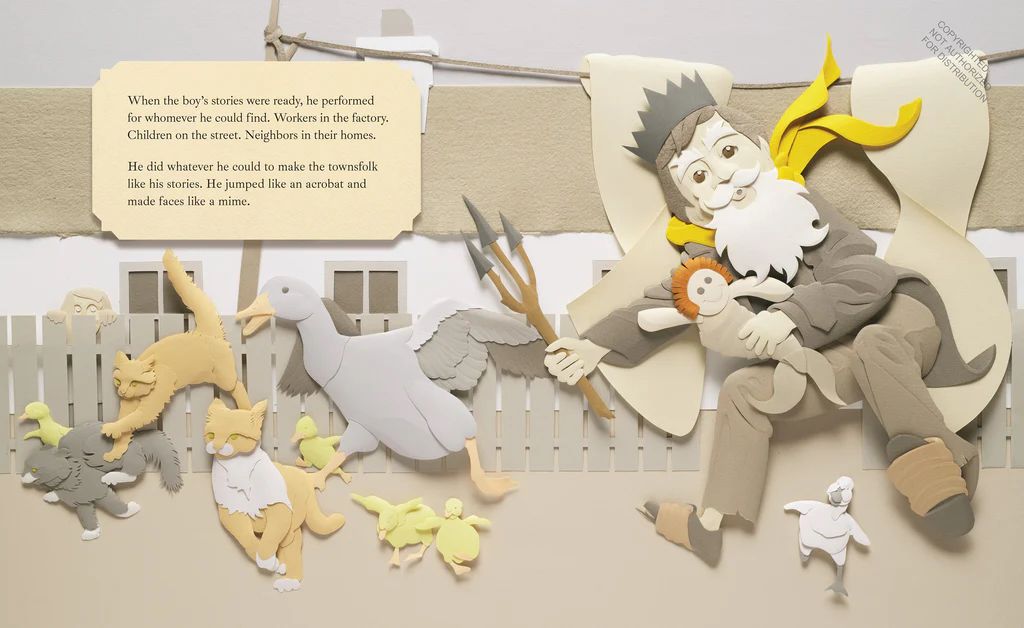
Illustration © Calvin Nicholls
Poetry Break Related poetry to recite before or following the reading of this book
Poetry breaks fit perfectly into the framework of the school day. These brief moments can signal change, smooth or frame transitions—from beginning or ending the day to lining up for lunch; from zipping up backpacks and jackets to shifting from one subject to the next. Poetry breaks can reset mood or tone, providing a moment to pause, reflect, and breathe. Reading a poem aloud typically takes less than a minute, yet it can introduce or reinforce a concept, provide clarity, celebrate language, exemplify rhythm, enhance vocabulary, expand understanding, increase attention span, initiate reflection, spark imagination, or simply summon a giggle. And, poetry soothes and strengthens the spirit.
“Poetry builds resilience in kids and adults; it fosters Social and Emotional Learning. A well-crafted phrase or two in a poem can help us see an experience in an entirely new way.” ~ Elena Aguilar
Poetry Collections with Fairy Tale Themes
Make poetry part of every learning day! Naomi Shihab Nye, is a prolific poet with books for readers of all ages. Among her many prestigious accolades, she was named Poetry Foundation’s Young People’s Poet Laureate from 2019 to 2021. Learn more about Naomi, her books, her awards, and samples of her poetry on the Poetry Foundation website.
And Then There’s This…
Enrichment activities, related books, online resources, craft projects, and ideas for further study
Book Collection Suggestions
Reading multiple books on a topic allows for deeper understanding and connection. Students’ knowledge base expands, comprehension increases, critical thinking sharpens, conversations deepen, and writing becomes more meaningful.
A classic volume of Andersen’s tales:
- Michael Hague’s Favourite Hans Christian Andersen Fairy Tales
A Select List of Recently Released Fairy Tales and Fractured Fairy Tales:
- The Chicken Little series by Sam Wedelich; clever, engaging spins on classic tales.
- Grimms’ Fairy Tales illustrated by Sandra Dieckmann; a beautifully illustrated keepsake brings Grimms’ tales to life for a new generation.
- Little Red and Big, Bad Fred by Ashley Belote; a thoroughly entertaining, comic fairy tale retelling; a perfect read-aloud for primary graders who will love being in on the joke!
- Rumpelstiltskin by Mac Barnett, illustrated by Carson Ellis; a hip retelling with plenty of shareable humor! See also The Three Billy Goats Gruff.
Recently Released Picture Book Biographies:
- Alberto Salas Plays Paka Paka con la Papa by Sara Andrea Fajardo, illustrated by Juana Martinez-Neal; Robert F. Sibert Informational Book Medal; Orbis Pictus Honor
- André: André Leon Talley–A Fabulously Fashionable Fairy Tale by Carol Boston Weatherford and Rob Sanders, illustrated by Lamont O’Neal; Coretta Scott King Illustrator Honor
- Blues Boy: The B. B. King Story by Alice Faye Duncan, illustrated by Carl Joe Williams
- Copland: A Story About Americaby Veronica Mang
- Fanny’s Big Idea: How Jewish Book Week Was Born by Richard Michelson, illustrated by Alyssa Russell
- Foote Was First!: How One Curious Woman Connected Carbon Dioxide and Climate Change by Jen Bryant, illustrated by Amy June Bates
- The Girl Who Figured It Out: The Inspiring True Story of Wheelchair Athlete Minda Dentler Becoming an Ironman World Champion by Minda Dentler, illustrated by Stephanie Dehennin
- Houdini’s Library by Barb Rosenstock, illustrated by Mar Delmar
- Jellyfish Scientist:Maude Delap and Her Mesmerizing Medusas written by Michelle Cusolito, illustrated by Ellen Rooney
- Measuring Up: How Oliver Smoot Became a Standard Unit of Measurement by Jenny Lacika, illustrated by Anna Bron
- The Not So Quiet Life of Marcel Marceau by Jenn Bailey and Sherry Bushue, illustrated by Pamela Zagarenski
- Singing Justice: The Story of Joan Baez by Monica Brown, illustrated by Molly Mendoza
- Spark: Jim West’s Electrifying Adventures in Creating the Microphone by Ainissa Ramirez, illustrated by Setor Fiadzigbey
- Talking Books: Audiobook Inventor Dr. Robert B. Irwin and a New Way to Read by Jenny Lacika, illustrated by Ashanti Fortson
- Teaching for Change: How Septima Clark Led the Civil Rights Movement to Voting Justice by Yvonne Clark-Rhines with Monica Clark-Robinson, illustrated by Abigail Albano-Payton
- Woods & Words: The Story of Poet Mary Oliverby Sara Holly Ackerman, illustrated by Naoko Stoop; Stonewall Honor
Biographies previously featured in Children’s Book Corner posts:
- Bartali’s Bicycle: The True Story of Gino Bartali, Italy’s Secret Hero by Megan Hoyt, illustrated by Iacopo Bruno
- The Curious Life of Cecilia Payne: Discovering the Stuff of Stars by Laura Alary, illustrated by Yaz Imamura
- The Efficient, Inventive (Often Annoying) Melvil Dewey by Alexis O’Neill, illustrated by Edwin Fotheringham
- Hosea Plays On by Kathleen M. Blasi, illustrated by Shane W. Evans
- Lincoln Clears a Path: Abraham Lincoln’s Agricultural Legacy by Peggy Thomas, illustrated by Stacy Innerst
- Mr. Lincoln Sits for His Portrait by Leonard S. Marcus
- Mr. McCloskey’s Marvelous Mallards: The Making of Make Way for Ducklings by Emma Bland Smith, illustrated by Becca Stadtlander
- When Sue Found Sue: Sue Hendrickson Discovers Her T. Rex by Toni Buzzeo, illustrated by Diana Sudyka
- Who Was Wilma Mankiller? by Andrea Page, illustrated by Stephen Marchesi
Have a title to suggest? Scroll down to add it in the Comments section at the end of this post.
Feel free to share this post with anyone you think might be interested: teachers, librarians, counselors, homeschoolers, parents, or authors. Want to receive the latest post each month? It’s free! Just sign up here. We never sell or share subscriber information.
Meet the Authors
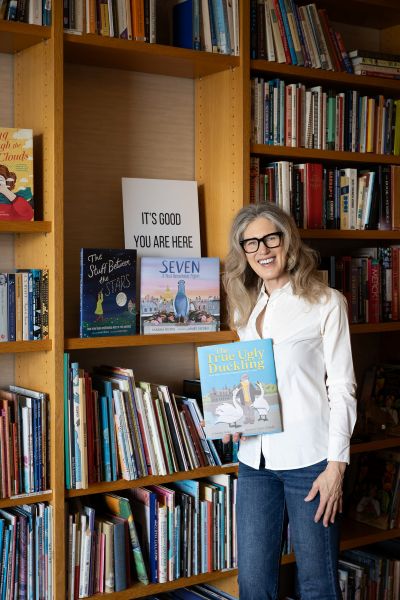
Sandra Nickel grew up in Iowa and Kansas. She knew all along that she thought a little differently than others, but did not then know she was autistic. Her unique brain led her to a variety of careers, including nurse’s aide, summer playground supervisor, clerk to a judge on the U.S. Court of Appeals, lawyer at a giant New York City law firm, food server, actress, wife, mom, and children’s book author. She lives with her family in Switzerland. Learn more about Sandra on her website.
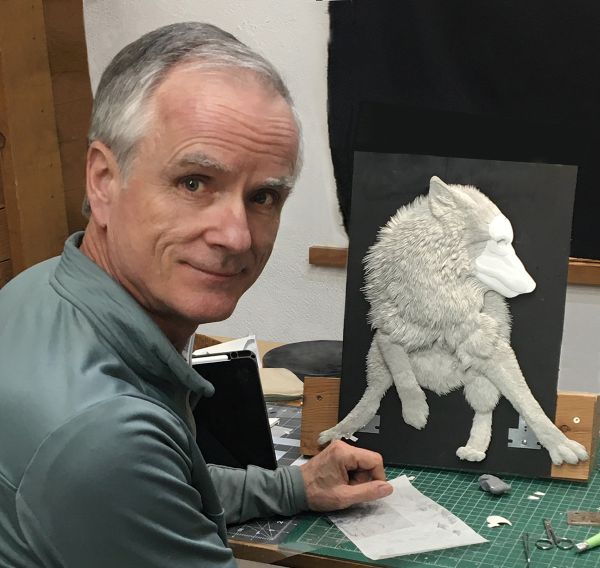
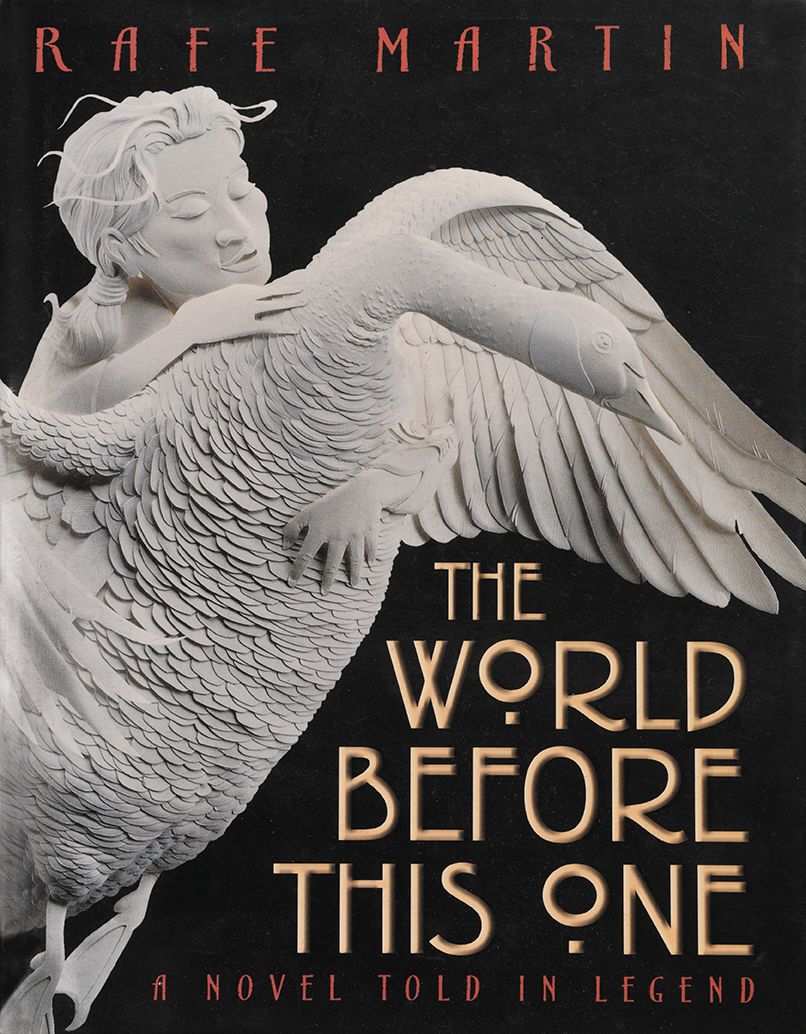
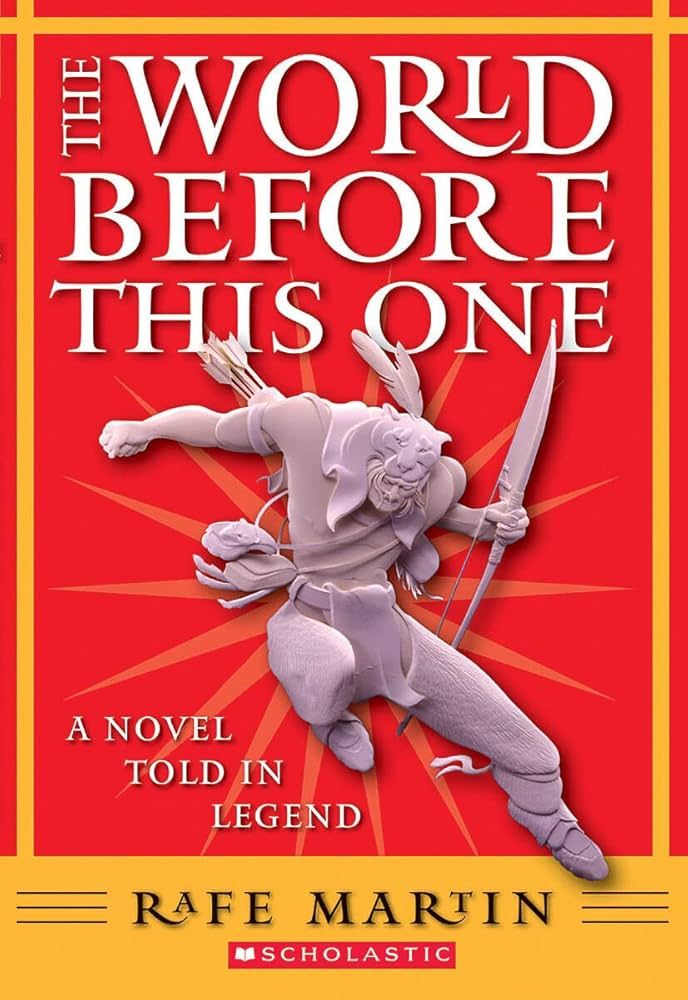
Calvin Nicholls is an award-winning paper sculptor who began his training in the graphic design program of Sheridan College in Oakville, Ontario. His work has appeared at the Woodson Art Museum in Wisconsin, in juried shows through the Society of Animal Artists, and in galleries throughout the United States and Canada. He created fifteen sculptures to illustrate Rafe Martin’s The World Before This One, which Kirkus Reviews called “remarkable,” but this is his first picture book. He lives with his family in Lindsay, Ontario. Learn more about Calvin on his website.
Backstory: Q & A with Sandra Nickel and Calvin Nicholls
It is my pleasure to introduce you to Sandra and Calvin to learn about their collaboration on this fascinating biography of Hans Christian Andersen. Of the many picture book biographies sent to me for review, this one instantly stood out. Written in the stye of a fairy tale, it engages young readers through expertly crafted text and remarkable illustrations. Moreover, the story of Andersen’s life offers a thread of hope and a sense of what inner strength looks like amid trial and tribulation. Sandra and Calvin’s enthusiasm and thoughtfulness in answering my questions is appreciated; it was my pleasure working with them both on this post, and I feel certain you will enjoy getting to know these creators and their biography of Hans Christian Andersen.
Judy Bradbury: Tell us about this project: What seeded its creation? How did you land on the lens through which you tell the tale of the life of the “strange child” Hans Christian Andersen?
Sandra Nickel: When my daughter and I found out we were autistic, I did a lot of research to learn what that meant. As I was doing this, I discovered that experts believe Hans Christian Andersen was on the autism spectrum. I also found out that Andersen considered himself the original ugly duckling.
Those two discoveries in combination really struck me! I think almost all neurodivergent children struggle with feeling like outsiders. I know I did, and so did my daughter.
And so, I decided to write about Andersen as he wrote about others who were different—in fairytale form. My hope is that this will help children understand him as he really was. I hope it helps them see him as a boy who struggled because he was different, but who also used his originality to find his place in the world.
JB: Calvin, this is your first picture book project, though you created fifteen sculptures to illustrate Rafe Martin’s The World Before This One. Tell us about how you came to illustrate The True Ugly Duckling and how you approached the creation of the art for Sandra’s biography of Hans Christian Andersen.
Calvin Nicholls: First, a request from Arthur Levine gets my full attention. He provided that amazing opportunity with Rafe Martin’s book The World Before This One which was a career highlight. So, Arthur’s belief that I was right for The True Ugly Duckling was an opportunity to be taken very seriously.
As for my approach, my first step was to appreciate the audience who would read the book. My second step was to become familiar with 1860 Denmark and the imagery that would be appropriate. It was easy to become immersed in Andersen’s life and struggles. Exasperation, humiliation, and rejection seemed like stepping stones to him. He never gave up acting on inspiration. It is unbelievable, really.
So, I was fired up. The challenge was bringing this all together with a character who grew from a little boy to an adult by the end of the story.
And to do this in colour! Much of my work has focused on form and light and shadow in subtle whites and contrasting backgrounds. But to fully tell Andersen’s story, it needed colour. So, I established a colour palette after an exhaustive search internationally for a soft spectrum of colour in weights that I could control given the infinite size of components required for the book’s sculptures.
Slowly, very slowly, my thinking and Arthur Levine’s reactions gelled and a direction page by page was approved. I colourised the sketches digitally to approximate the effect achieved in paper and the first sculpture was completed as a test. It was the harbour scene. Such a critical image for me, where that fourteen-year-old boy leaves home and arrives in the land of promise. He perches at the end of the bowsprit straining to process the sights, sounds and scents. This was my entry point for the project, and it propelled me through every other page. It all emanates from that little boy on the bowsprit.
JB: Sandra, tell us about a challenge you faced in the writing of The True Ugly Duckling.
SN: The world has always been an incredibly vibrant and overwhelming place for me. To hide how hard everything was, I masked and pretended that I felt none of that, that I experienced the world as “normal” people do.
When I first learned about Andersen likely being on the spectrum, I was struck by how he drew on his innate differences to write about outsiders. The little matchgirl. A mermaid who gave up her voice to be like others. But when I started writing Andersen’s story, it was incredibly hard for me to portray the traumatic events he lived through. I caught myself trying to soften his story. I was, as it turns out, masking for him—and for my readers too. I was trying to protect them. That’s when I realized the best way to tell his story was as a fairytale. These types of tales have villains doing villainous things. But they also offer us hope and understanding in a deep and meaningful way.
JB: What is your favorite illustration in the book? Why?
SN: My very favorite spread is the one Calvin just mentioned, where the shoemaker’s son sails into Copenhagen. The way Calvin conceived it is just incredible. It is imbued with a heart full of hope and expectation. It’s a stunning moment of beauty before the reader turns the page and begins to learn that Copenhagen was just as difficult for the shoemaker’s son as the village he had left behind.
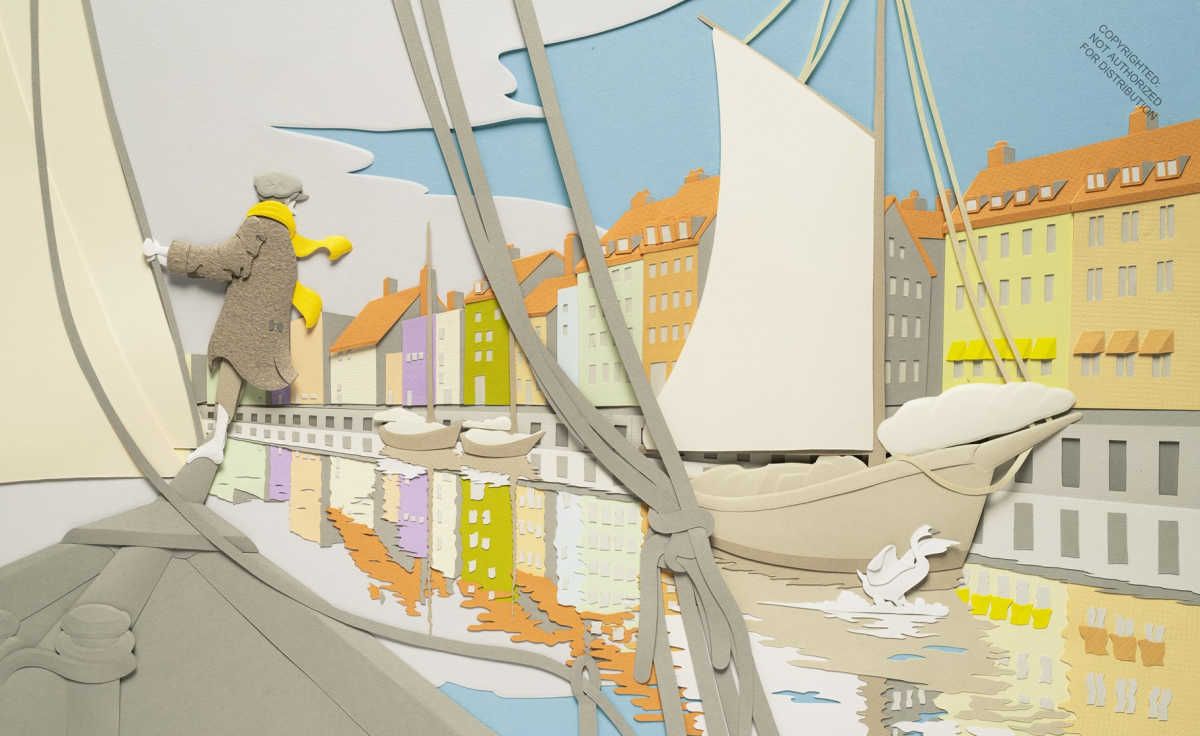
Illustration © Calvin Nicholls
JB: What is one unexpected joy that came from the creation of The True Ugly Duckling?
CN: When Arthur Levine first asked me to be the illustrator, I knew immediately how complex making a picture book would be. I would have to stretch way beyond my comfort zone. But then I learned about the paper-cutting connection between Andersen and myself and that infused the entire project with pure joy.
SN: For me the unexpected joy came from the closeness my daughter and I felt with Andersen. I had gone to Yale to be with her after Yale Health diagnosed her as autistic. We curled up on a bed together and as she studied, I researched Andersen and shared my discoveries about the trials he faced growing up. She and I had also struggled with feeling like outsiders during our growing up years and the connection with Andersen, and with the knowledge of who we were discovering ourselves to be, was truly wonderful and reassuring.
JB: Sandra, what would surprise readers to learn about the writing of The True Ugly Duckling?
SN: As my daughter and I were curled up on that bed, a second story came to me. So, as I was writing Andersen’s story, I was also writing about a young pigeon who shows that the ways in which we are different can also be the ways in which we become heroes. It is very much an homage to my daughter. In fact, it is dedicated to her. Seven, A Most Remarkable Pigeon (Candlewick 2025), illustrated by Aimée Sicuro.
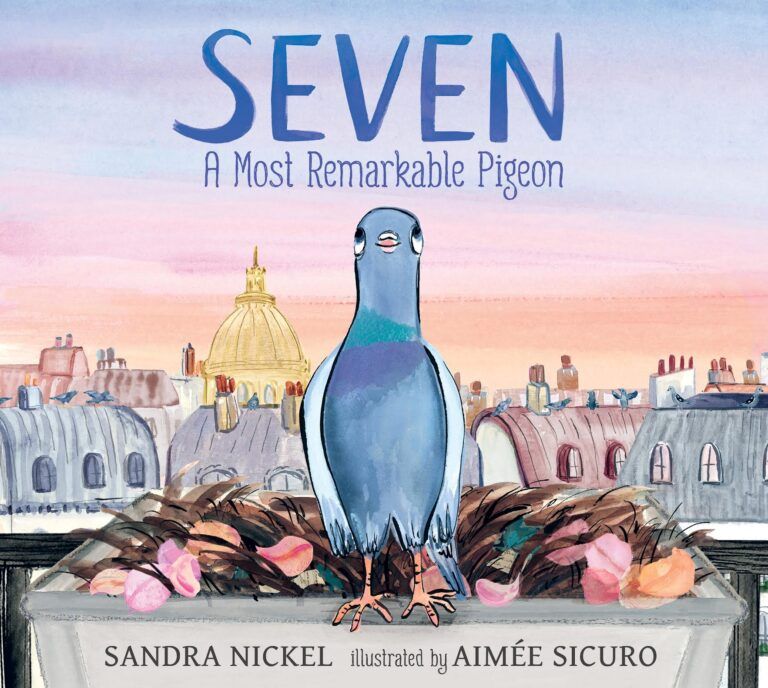
JB: Calvin, what would surprise readers to learn about you or the illustrating of The True Ugly Duckling?
CN: The hard work that went into making this book. Honestly, there is no other project that tested me so thoroughly considering: storytelling, character development, emotion, moment, design, variety of angles, architectural and supporting prop authenticity, sadness and laughter (the toad shadow) and an homage to Andersen. The list was enormous and intimidating. But I could identify with this boy. I became that boy as the images started to flow.
As an artist and parent with artist children, I know the hurdles and challenges of being a creator. Adding to that the reality of Andersen’s neurodivergence, the book was incredibly important and meaningful to me. That initial idea of having a picture book in my career was quickly dwarfed by the actual prize. Helping to bring Sandra’s words to life, to cause readers to pause, was profound.
JB: How do you see The True Ugly Duckling connecting to curriculum or being used in learning settings?
SN: There are so many ways The True Ugly Duckling can be used, ranging from social-emotional learning to the use of plot diagrams. Parents, teachers, and librarians can find a classroom guide on my website that includes discussion questions about the book, suggested activities, as well as three downloadable activity sheets.
JB: Who do you perceive your target audience to be for this book and why?
SN: I know it might sound surprising, but I view everyone as the target audience. As I mentioned above, I chose to write The True Ugly Duckling in fairytale form because of how fairytales resonate so deeply with us. They go straight to our hearts. Our yearning for acceptance. Our longing for love. Our search for who we really are. It’s not just the duckling and Andersen who had these desires and longings. We all share them, whether we are five or ninety-five.
JB: What do you hope young listeners / readers will take away from The True Ugly Duckling / What need(s) does this picture book biography satisfy?
SN: I think there are a lot of kids who feel they don’t fit in for whatever reason. They may be bullied or they may be ignored or they may mask heavily, as I did. I hope The True Ugly Duckling finds its way to whoever needs it. I hope it offers connection and reassurance, and most of all, that it gives children confidence to stick with the song their heart is singing. For Andersen that was story-making. He stuck with it through bullying and poverty and slammed doors. I hope children will be encouraged by this unwavering desire to follow his heart and that they become their own versions of the swans they are meant to be.
JB: If you could ask your young audience one question, what would it be?
CN: Do you understand the idea of acting on inspiration? Do you know someone who you love or who loves you that likes to play with ideas? And who is famous for that ability? Seek them out. Learn their secrets. Learn to act on inspiration. That’s how the world gets bigger and brighter.
SN: As you know, I believe fairytales offer deep connection. Hans Christian Andersen said The Ugly Duckling was the story of his life. So, I would ask my young readers, Which fairytale is the story of your life? If they say they don’t know, I would encourage them to write their own.
JB: What project(s) do you currently have on your desk?
CN: Art collectors are a common source of joy for me. Our collaborations for new artwork inspire me as I not only rely on my own energy but that of the partners in these projects. It’s so much fun. I’m working on a backyard bird series and even a little elephant for a friend who has many of my sculptures. At this stage of my career, I also love reflecting on my favourite subjects and wildlife encounters. A large piece is in the drawing and research stages currently that will record one such moment.
SN: I am currently working on a project with my daughter. It’s hush-hush right now. But I can’t wait to tell you more once the news is out.
JB: What is one question you wish I had asked, and what is your answer?
CN: How does the artwork get transformed from glued bits of paper to images in a book?
Answer: I often describe my process as “sketch to sculpture” but there is another phase that I actually find the most rewarding. Once the artwork is complete and every solution and inspiration has been acted on, it’s time to position the sculpture (in low relief) under sophisticated studio lights to find the best type of light and direction to bring it to life. I love it when light breathes life into my work. Soft light or hard light is tested to consider the shadows and how “hot” the highlights are.
With photos complete and the illusion captured, final images are further edited in subtle ways to soften a hue here or there. The artwork is now transformed and ready to become a book. The artwork itself is also suitable for framing. It was created with that in mind as well. The relief, or depth, is rarely greater than an inch even in the sculptures I created for the book, which were completed at a working size of about 24” x 16”.
Sidebar Spotlight New releases of note
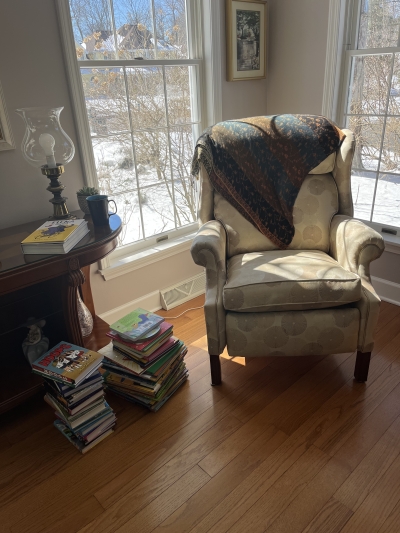
Each month I receive several boxes of books for review from various publishers. As I read and peruse the books, I place them in two piles: those that I will consider featuring on the blog, and those that don’t fit the theme of Children’s Book Corner blog for whatever reason. Ultimately, I choose the one new release I will feature on my monthly blog post. Yet there are many terrific books I wish I could give a shout-out to, even if I can’t write an entire post about each one. So I highlight those books on most Mondays on Instagram and Bluesky.
Sidebar Spotlight is a means of giving a nod to new releases that, in my opinion, are noteworthy. I’ve linked each title to Bookshop so you can learn more. Happy reading, friends! And feel free to comment on these or other new books in the Comments section at the end of this post.
How Not To Make a Jelly Sandwich by Ross Burach is an absolute hoot from cover to final page. Here’s a picture book that will engage 4-8-year-olds with its pure silliness mixed with spot-on creativity. This book is a read-aloud winner. Buckle up for a runaway giggle fest!
The Not So Quiet Life of Marcel Marceau by Jenn Bailey and Sherry Bushue, illustrated by Pamela Zagarenski is a captivating and illuminating biography of Marceau’s courageous and resourceful young life created by an award-winning team. Ideal for middle graders; includes detailed back matter.
In a nod toward spring, here are three standout picture book titles celebrating trees:
Just One Oak by Maria Gianferrari, illustrated by Diana Sudyka
More Than a Tree by Sarah Kurpiel
The Mother Tree by Sybil Rosen, illustrated by Nancy Carpenter
Thanks for reading Children’s Book Corner! If you would like monthly posts delivered free to your inbox, sign up here. We never sell or share subscriber information.
News, Updates, & Items of Interest
Children’s Book Week, established in 1919, is a celebration of books and the connection they bring. It takes place this week! The 2026 Children’s Book Week Poster has been created by Grace Lin to celebrate curiosity in light of this year’s slogan: Books: Get Curious! Visit the Every Child A Reader website to learn more about free materials, resources, and activities.
Find information about where my books and I will be on my Events page.
Find me online at Instagram, Bluesky, and LinkedIn where I post about books, book-related items of interest, Little Free Libraries, and occasionally travel (on IG). Connect with me there!
I am currently booking school visits and professional development sessions for Summer 2026 and the 2026-27 school year. Find information and contact me to discuss a visit tailored to meet your school’s needs.
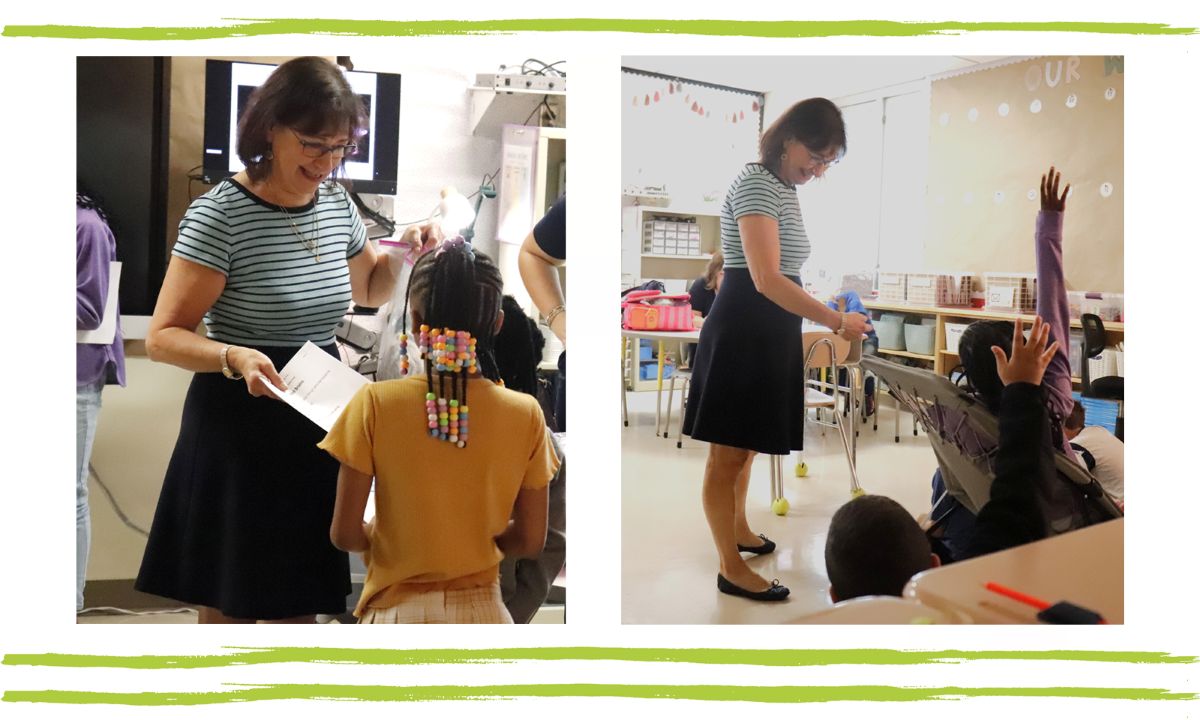
Photo credit: Jody LaRose
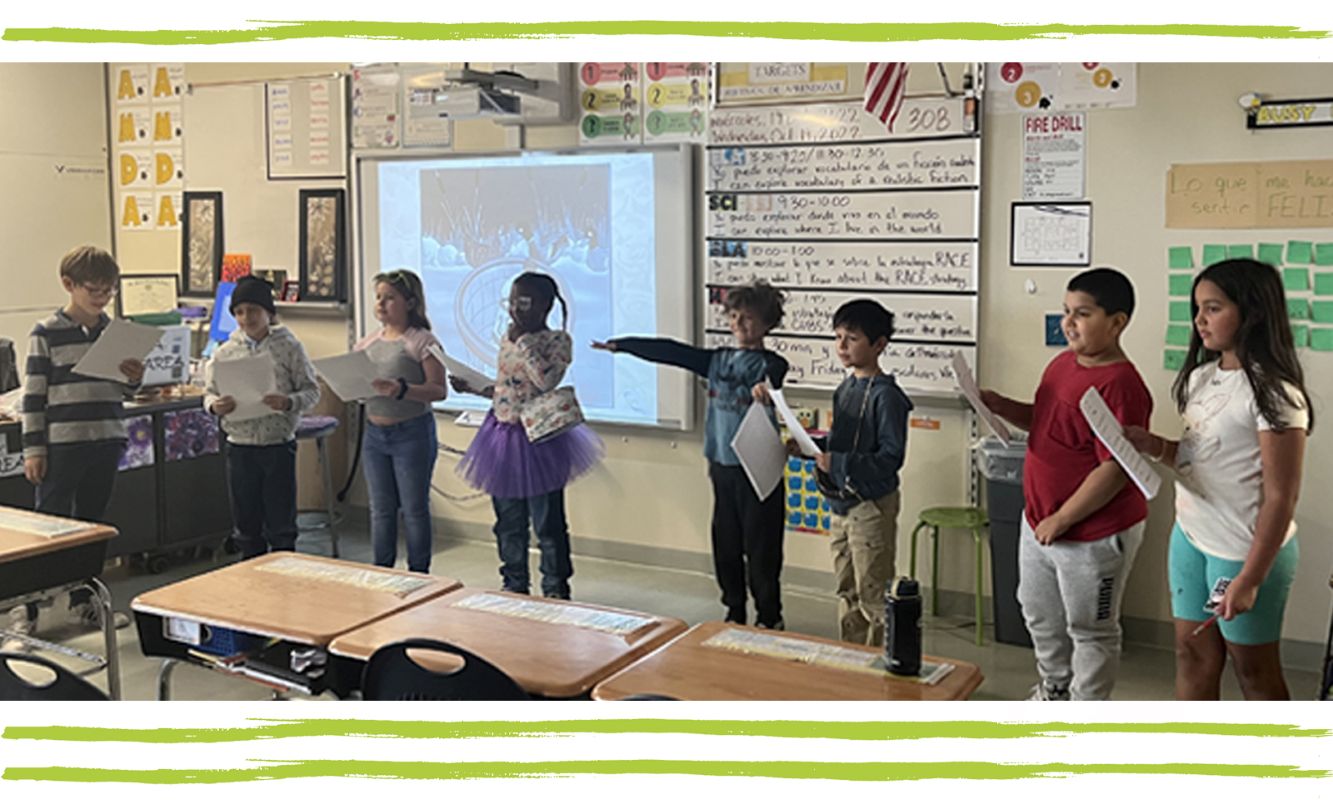
Readers Theater with props! Cayuga Island Kids, The Adventure of the Big Fish by the Small Creek
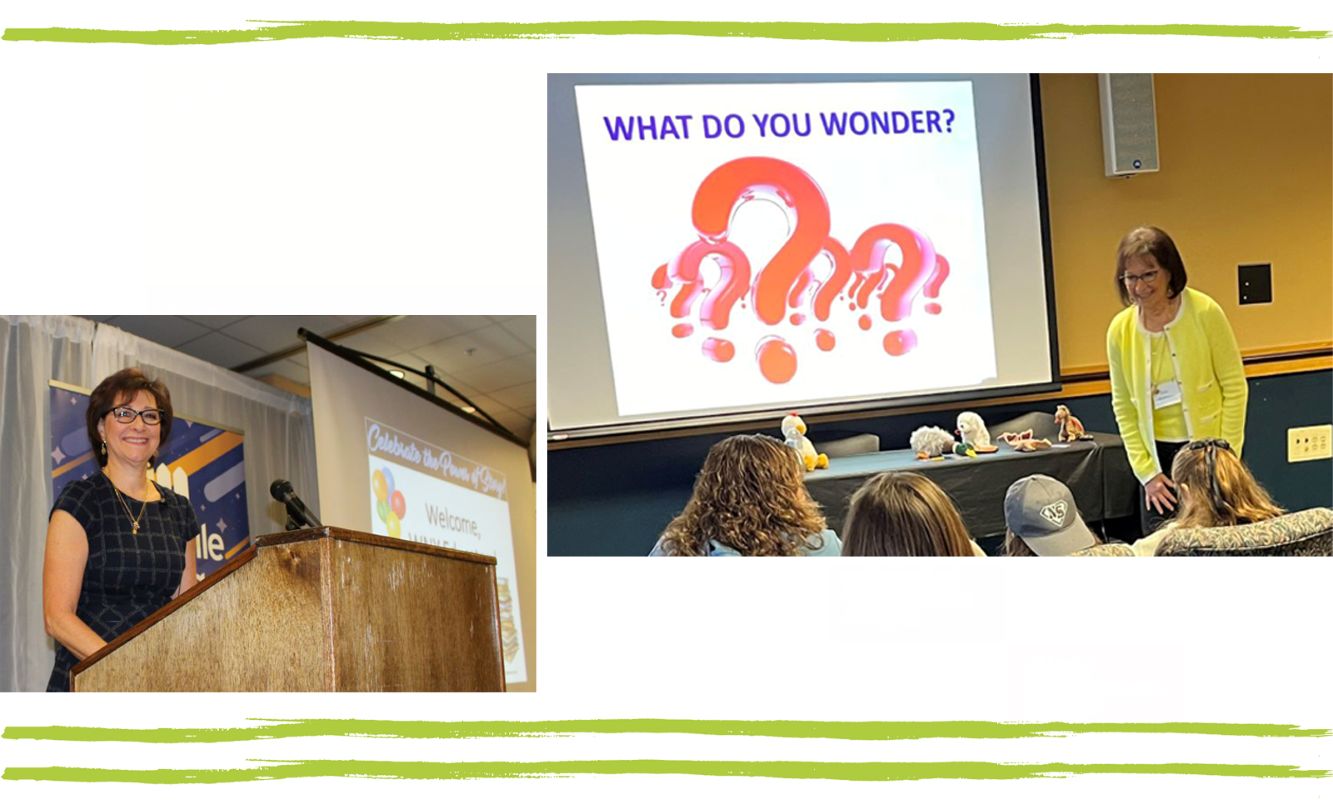
Small and large group presentations
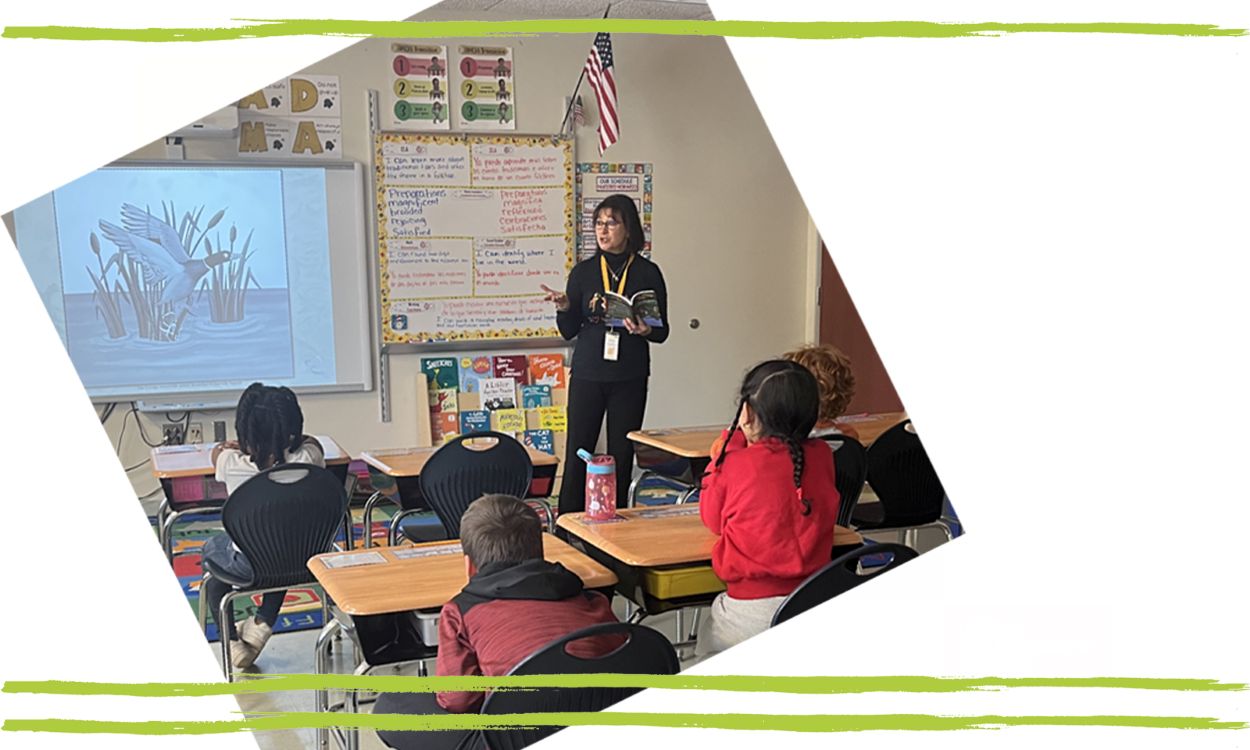
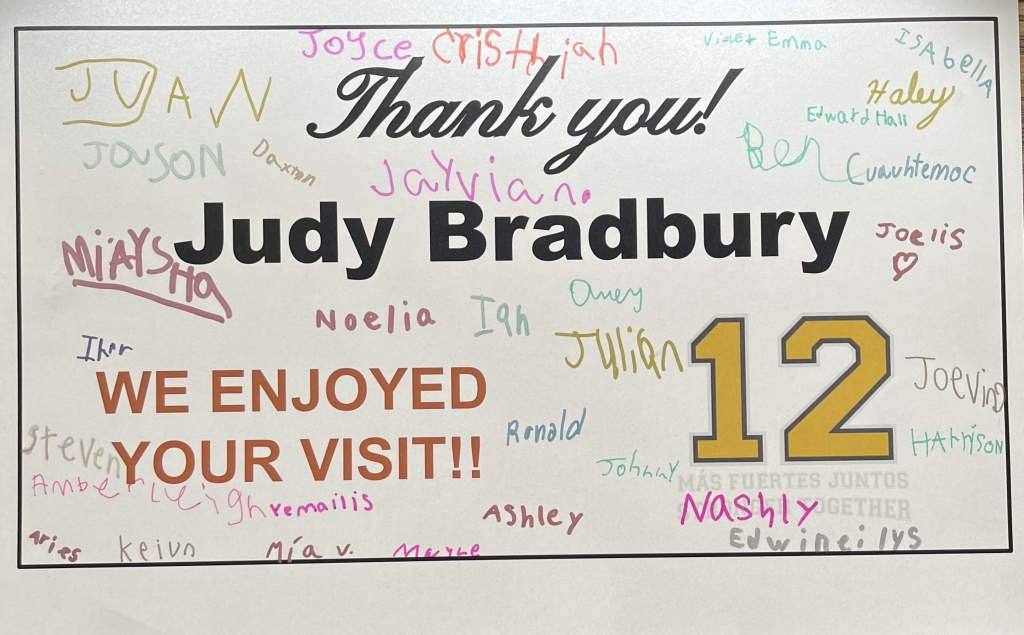
A note received following a recent school visit:
Thank you so much for coming to meet with my students. You were wonderful, answering their questions and explaining how you wrote the book. We all loved it! Here are some illustrated thank you notes the students made for you. Thank you again!
And here’s a note I received after presenting “SEL-Related Children’s Books with Curriculum Tie-Ins” to teachers and librarians of Grades Pre-K—Grade 6:
Thanks so much for presenting! I heard wonderful things about your workshop! One person mentioned to me that you were so organized and passionate. They also loved seeing all the children’s books you brought with you!
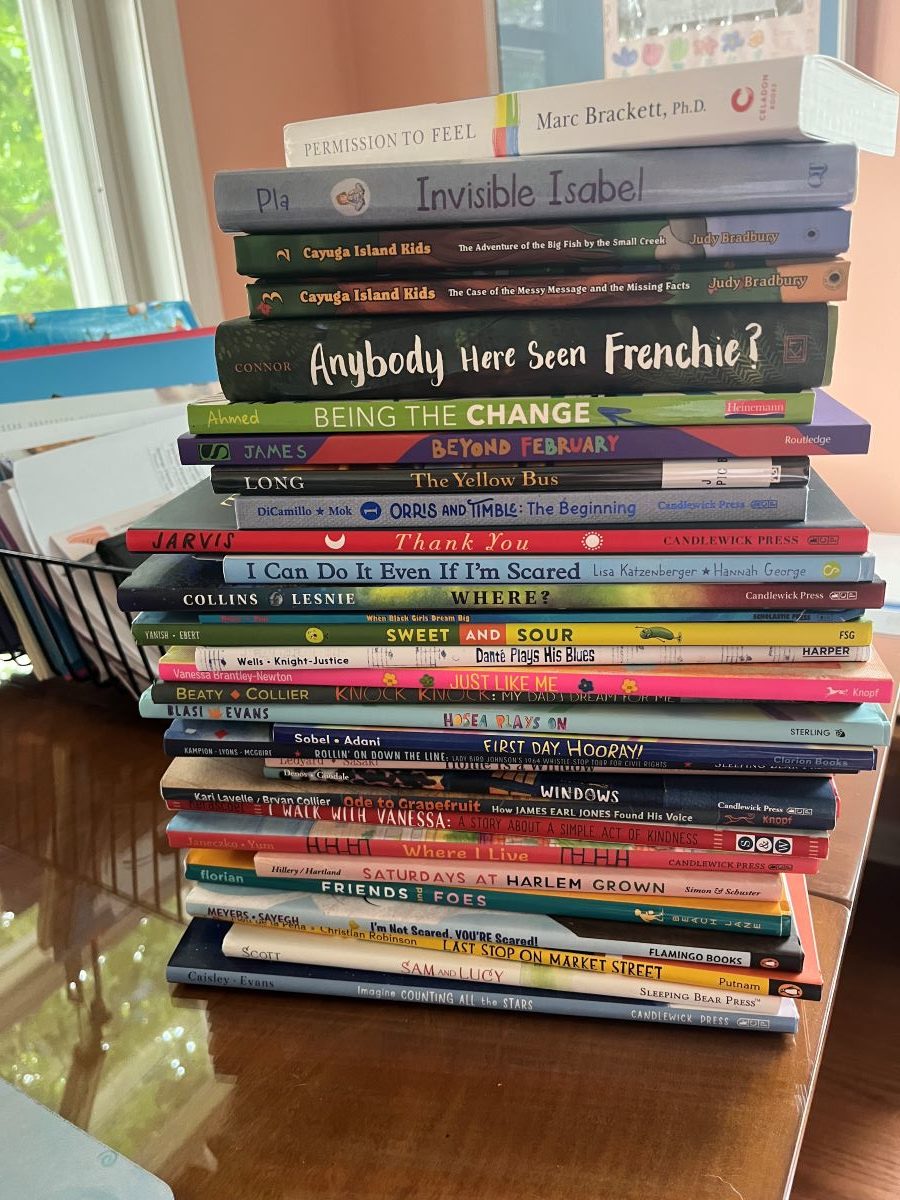
Find my books packaged as a series at your favorite bookseller. Individual titles are also available in hardcover, softcover, and e-book versions.
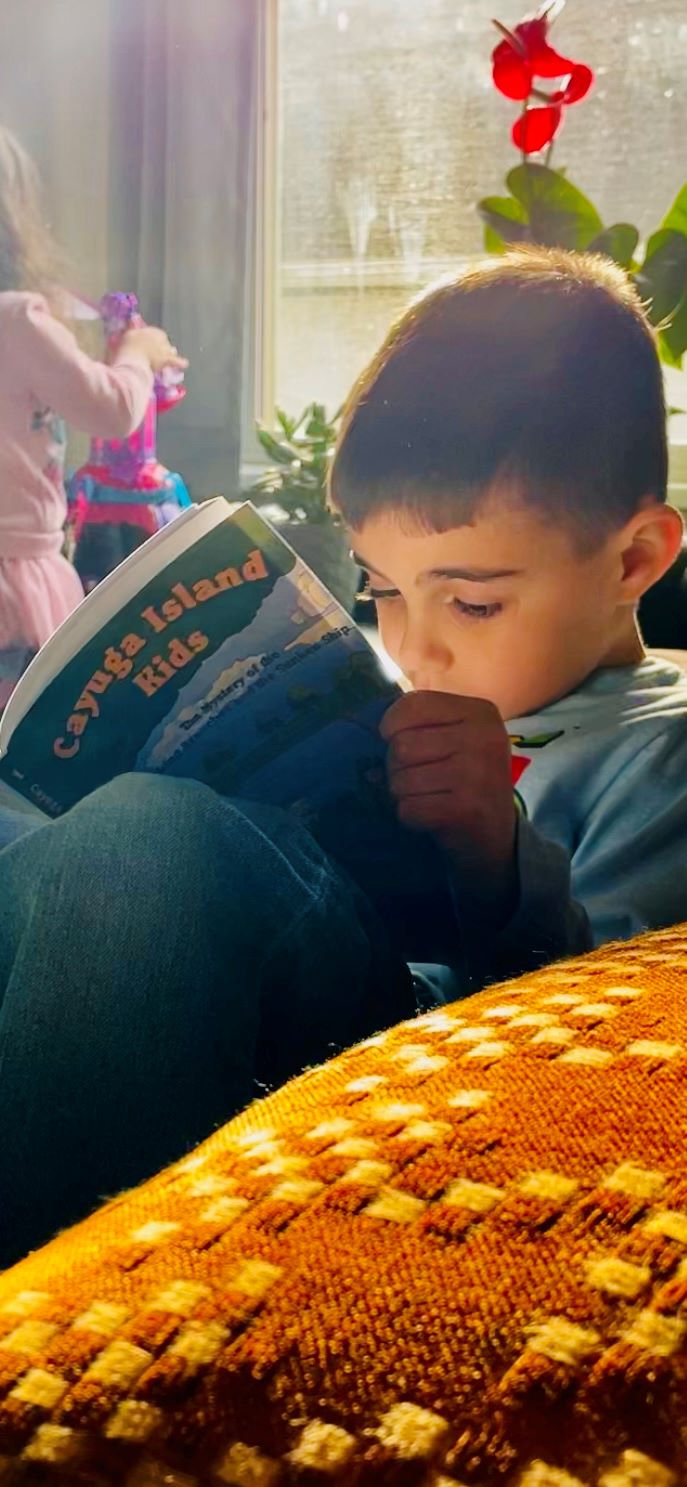
Kindness tip: If you read and like a book, consider posting a review on GoodReads, social media, or on Amazon (if you bought it there). Authors and illustrators appreciate the shout-out. Even a one-sentence comment increases visibility of a book. Also consider placing a request with your local library to purchase a copy–another free way to support a book you recommend!
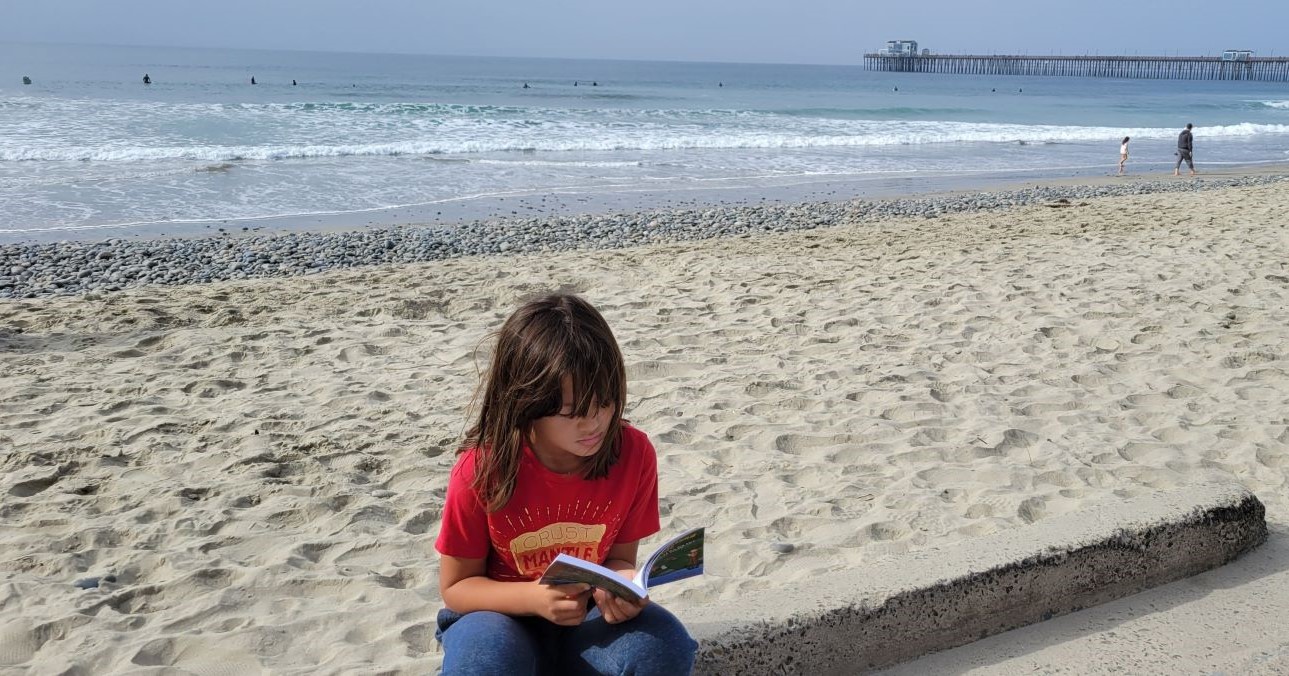
As we come to the close of the school year, Children’s Book Corner will be on hiatus through the summer, returning in late August. Enjoy the longer days, starry nights, hammocks, beach time, and shady spots, as you discover wonders that can be found between the covers of a book. During the break, feel free to reach out to me with comments on any of the posts, or share a recommended title via the contact link. Happy summer, everyone, and thanks for joining me here at the Children’s Book Corner! See you in the fall!
Over to You…
Join the conversation! Offer your thoughts related to this month’s post in the Comments section below:
What picture book biography stands out to you? Share the titile, author, and suggested age or grade range.
You are also welcome to post a general comment.
Thanks for sharing!
Final Thought
“But shouldn’t all of us on earth give the best we have to others and offer whatever is in our power?“
~ Hans Christian Andersen, Fairy Tales
That’s a wrap! Like what you’ve read today? Have Children’s Book Corner delivered to your inbox each month. Sign up for free! We never sell or share subscriber information.
I am going to be looking for this book. I agree with the idea that we all at least occasionally feel like an ugly duckling, and appreciate that this book encourages us to use that feeling.
Thanks for this thoughtful reflection, Vivian. I agree that Sandra’s takeaway is empowering, and it’s stunningly illustrated by Calvin’s art.
Very well put Vivian. In a discussion with Sandra some words came to mind that helped me bring more hidden messages into view in this clever story of hers. The idea that Hans saw his episodes of rejection as stepping stones to success is inspiring. Books like this one are so important. There are big and little heroes among us who need that mindset. It is an honour to be part of a project like this one to make it possible.
My technology occasionally fights back. I had also had a comment about how incredibly beautiful the illustrations are, and how especially appropriate. But my “smart” phone ate that part of the review.
Thank you for your thoughtful response to my post. And especially thank you for bringing the story so vividly to life.
🙂 Ha! That’s very kind of you Vivian. Thank you
Oh, Vivian, thank you so much. I appreciate the connection we have.